
In September 2025 I attended the workshop Photos, Films, Documentaries, and Monuments: Tools and Methodologies for teaching Memory held on the 17th and 18th of September, and I went to the event Persecution and discrimination based on gender and sexual orientation under Nazi-Fascism in Italy and Austria on the 29th September.
Both the events were part of the CU Remember project, which encourages teachers and educators to learn and network with each other. I took part at the workshop and at the event as history student and tutor for Deina APS, an Italian association that works with high school and universities students, through projects, as the core project Promemoria_Auschwitz, an educational programme that combines historical workshops and study journey to Kraków and Auschwitz-Birkenau, engaging critically with history and memory, mechanisms and complexities, creating space for debate and critical thinking.
In the workshop participants were guided through different questions as why a certain group of famous photos became a standard in the didactic of the Shoah and sometimes symbols for the narration of memory of the twentieth century. Then, we discussed photographs as part of the history of violence itself, highlighting the central role of the photographer’s point of view and considering how acknowledging who produced an image, and in what context, can help us frame the source more accurately. The workshop then moved on the theme of cinematic representations of the Shoah and their limits. Films inevitably represent historical events according to their own narrative purposes and may therefore distance themselves from historical sources prioritizing the language of the genre than that the content itself.
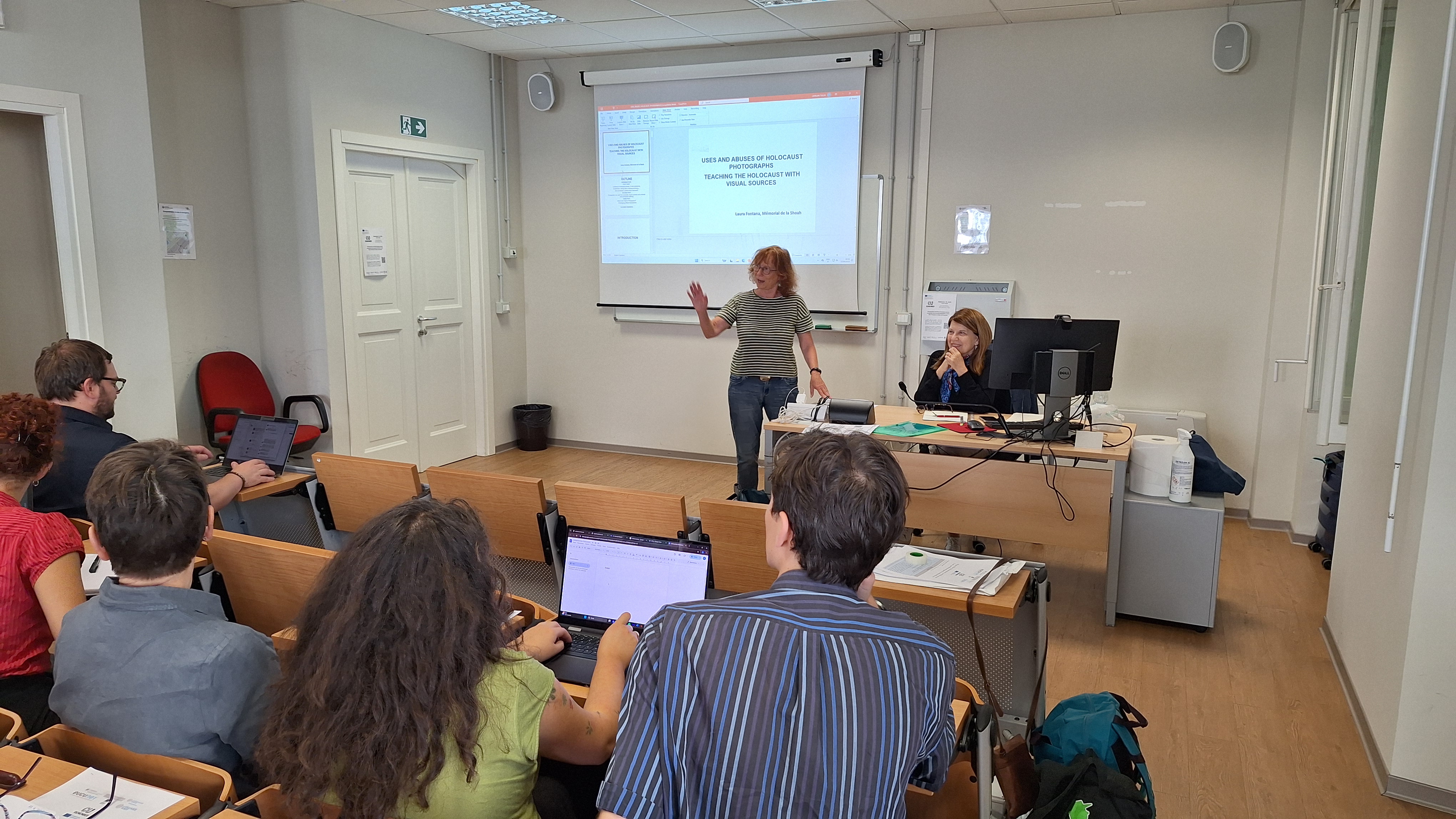
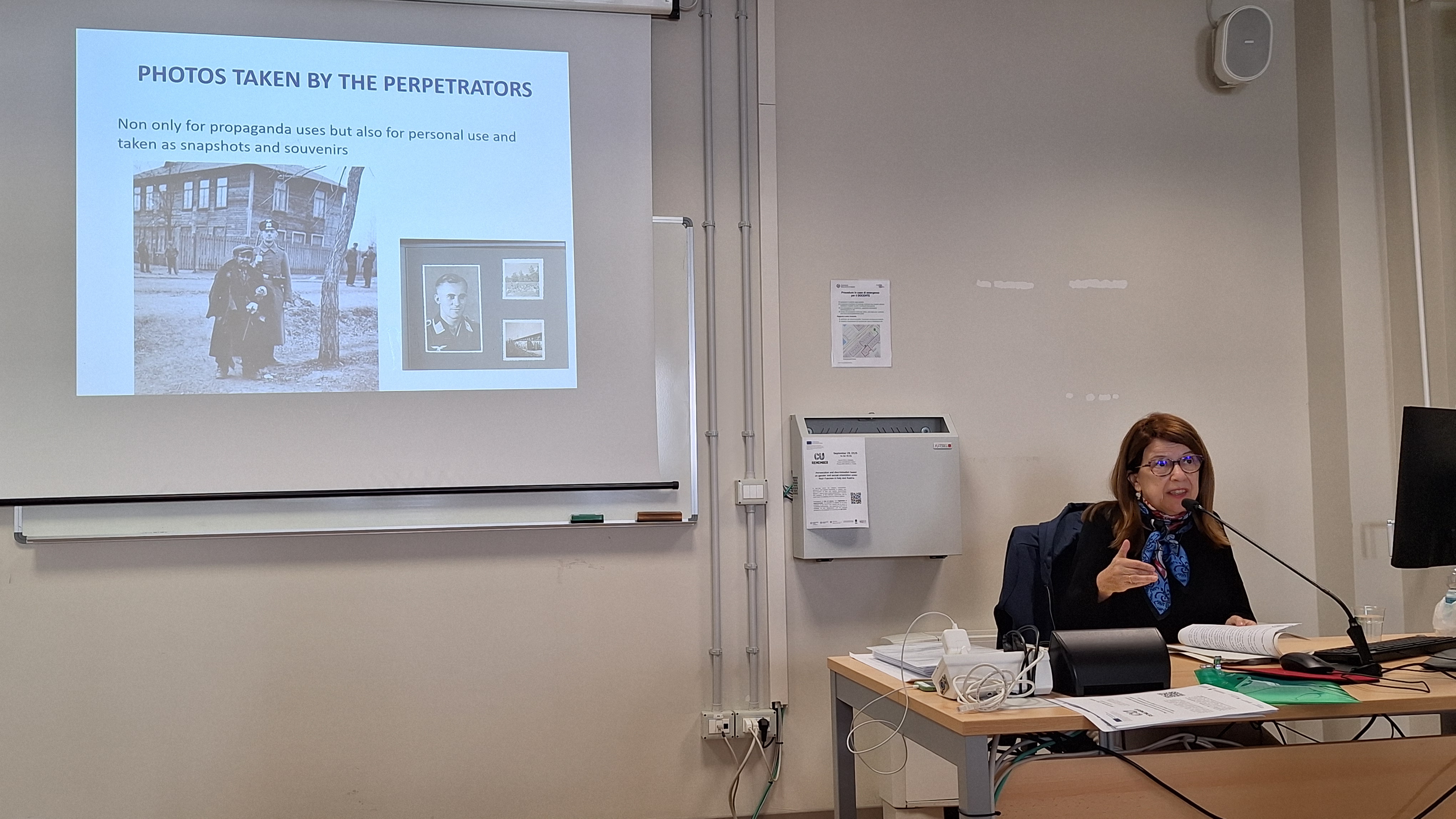
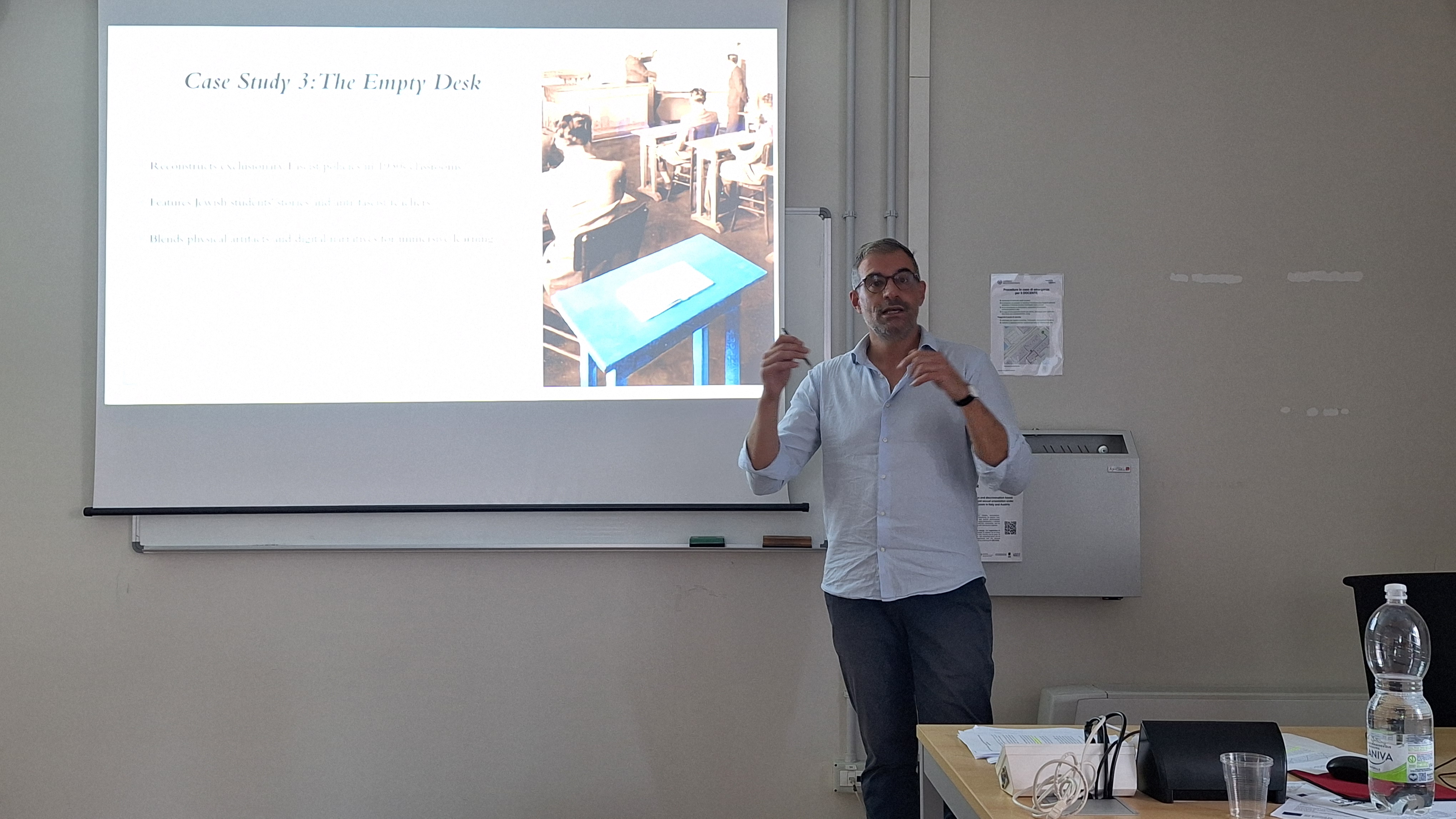
Throughout the lessons and discussions, concepts such as framing and points of view were central. As we are usually used to perceive pictures as appendix of written texts, we must try, while teaching through images, to have and to use tools, particularly methodological ones, to frame not just the subject of the photo, but the image itself as a source. The workshop meant, in this sense, to give us those useful tools.
On the other hand, the event Persecution and discrimination based on gender and sexual orientation under Nazi-Fascism in Italy and Austria offered another example of what it means to adopt a particular point of view, by intentionally focus the discourse on a lesser-known and sometimes deliberately neglected part of history.
Ultimately, I believe that clearly acknowledging a point of view, while carefully framing sources and narratives, is both a challenge and a responsibility for us as educators. It requires honesty, methodological awareness, and historically grounded knowledge.