
by Chiara Thörmer, Chris Gary, Thomas Troy [Vienna University Children’s Office]
Two Classes, Two Dynamics: Lessons from Pilot Campus Tours
Two school classes, close in age – and yet the tours unfolded very differently. During the pilot sessions with a 3rd and a 4th grade class, it quickly became apparent just how strongly group size, dynamics and interests shape the flow of a tour
First Guided Tour: 3rd Grade
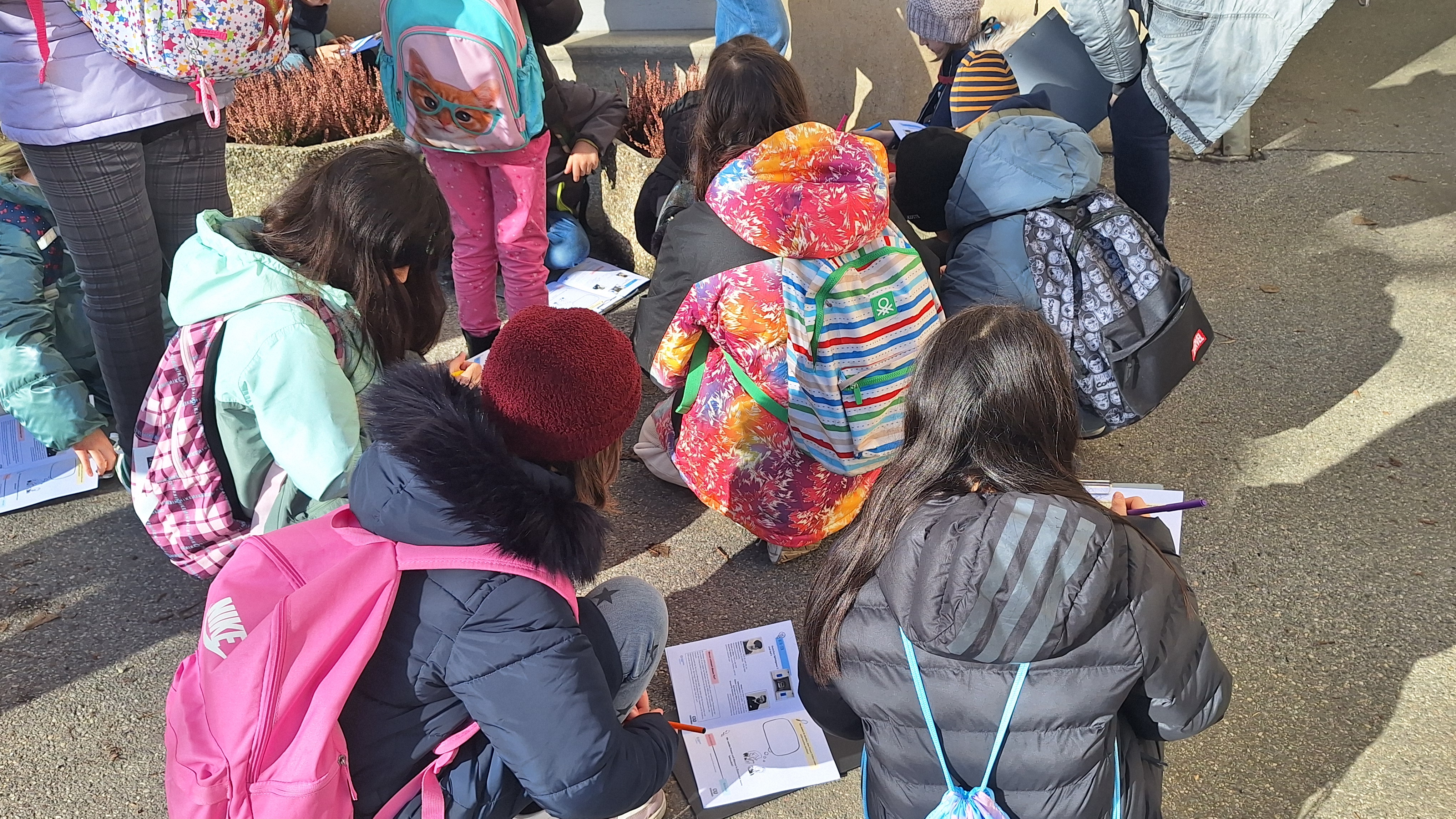
The first class consisted of around 16 students and was a rather calm group. This had a noticeable effect on the atmosphere during the tour: the children were able to concentrate well on the stations, participated actively and engaged thoughtfully with the memory journal. The campus map in the journal helped many students navigate the campus and follow the sequence of stations, creating a sense of orientation and independence.
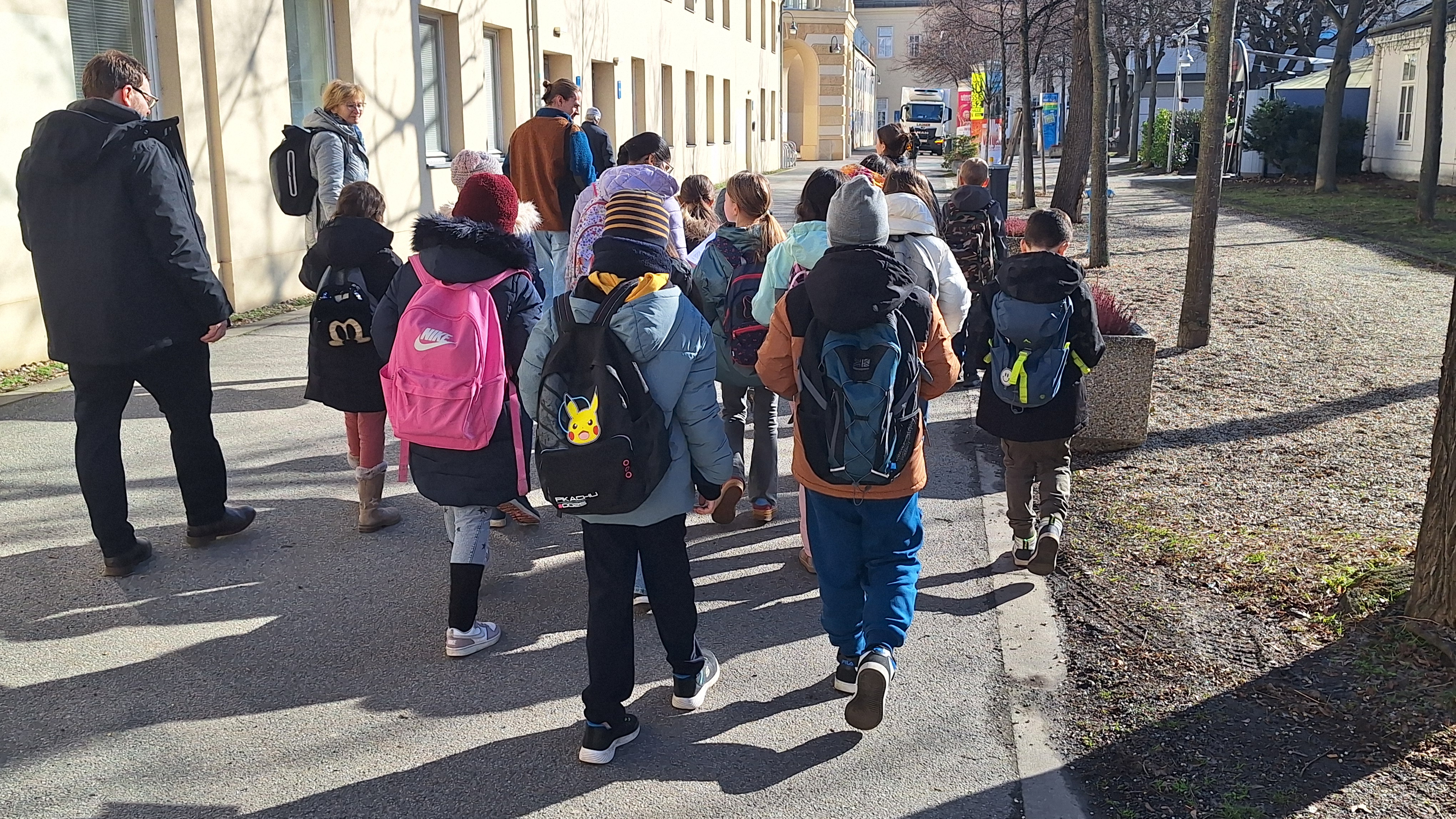
The children’s curiosity stood out. They asked questions at the stations and in between, reflected together and used the breaks to explore further. A longer break also offered the opportunity to visit a lecture hall, providing a firsthand glimpse of campus life – a new and impressive for many of the students.
At times, however, the busy campus environment, including deliveries and passing pedestrians, made it more challenging to keep the group together. In addition, the lack of seating at some stations meant that writing in the journal required some flexibility.

Second Guide Tour: 4th Grade
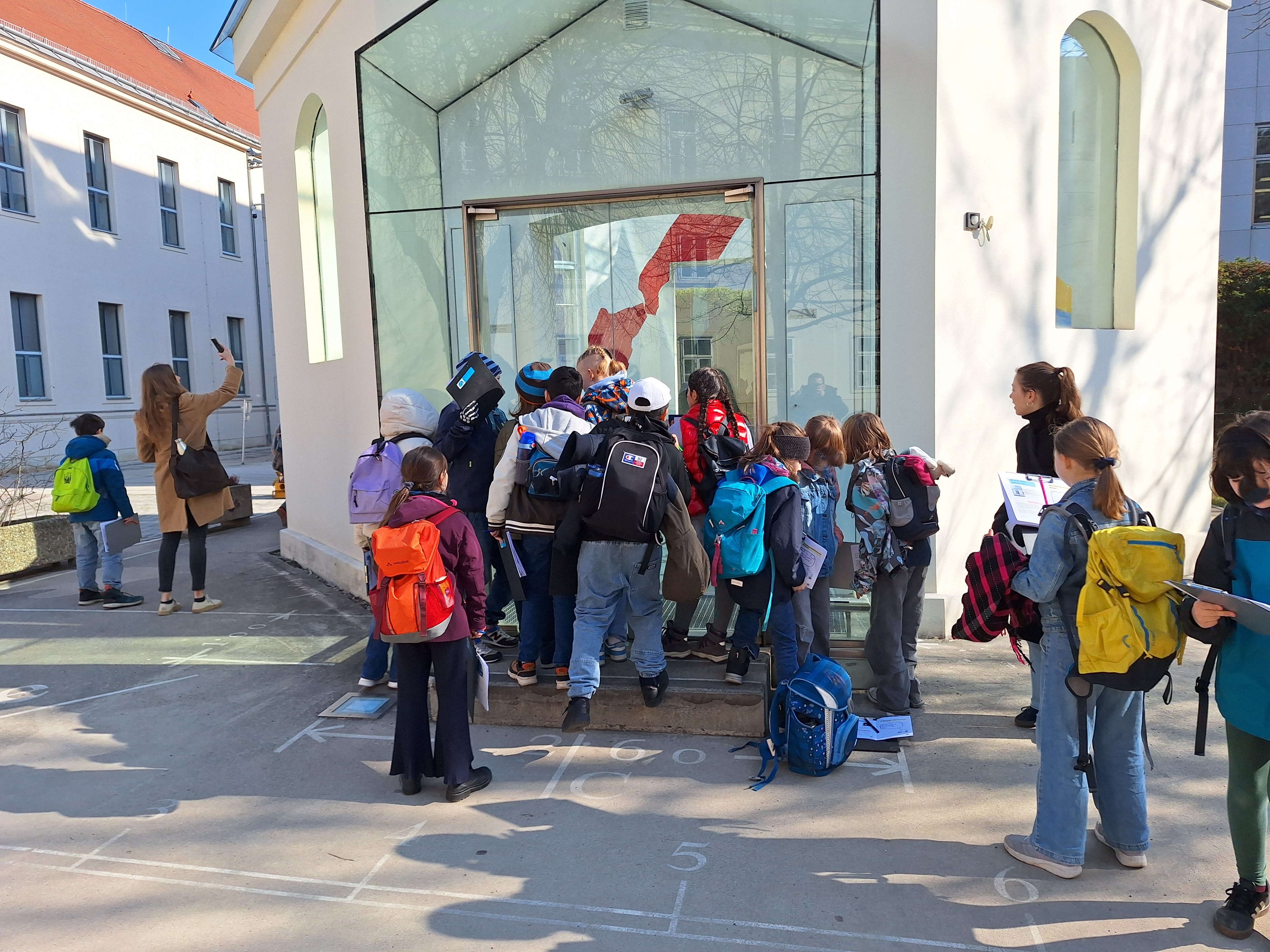
The second class included around five more students and was noticeably livelier. The children were curious about different aspects of the campus and focused on their own points of interest. From the first pilot, the approach of allowing different children to contribute at each station was adopted, ensuring that everyone had a chance to participate. This increased engagement and added more energy to the tour.
During breaks, the students explored their surroundings independently, developed new questions and actively discussed their observations. The campus map played a smaller role this time. Instead, the focus was on direct orientation and group interaction.
The livelier dynamic also required a more flexible approach to maintaining attention and the need for breaks was more pronounced. Adjusting the schedule during the tour allowed the group’s energy to be accommodated while keeping the overall flow intact.
Conclusion
Both pilot tours were highly insightful and provided valuable input for the further development of the program. What became particularly clear across both groups was how strongly group size and dynamics influence the flow of the tour: calmer groups allowed for more focused work and structured reflection, while livelier groups brought more spontaneity and energy, but also required greater flexibility in guiding attention and pacing.
External factors such as the busy campus environment and the availability of suitable spaces for writing and reflection also shaped the experience in both cases.
Overall, the differences between the two classes clearly demonstrate the importance of flexibility in educational settings like this. Each group brings its own dynamics, interests and needs. Successful tours depend on responding to these. In this way, the campus becomes not only a place of history, but also a space where children can actively explore, observe and reflect.
All images by © Chris Gary and Thomas Troy