
by Chiara Thörmer, Chris Gary and Thomas Troy [Vienna University Children’s Office]
How can young people be introduced to the topic of remembrance?
This question led to the development of a new interactive campus tour for school classes aged 7 to 12 at the University of Vienna. It introduces children to the idea that remembrance can be found in many forms—through monuments, gates, and other visible traces across the campus—and invites them to actively explore these sites, connect them to their own lives, and bring their own thoughts and perspectives into the tour
Memory Trail and the Memory Journal
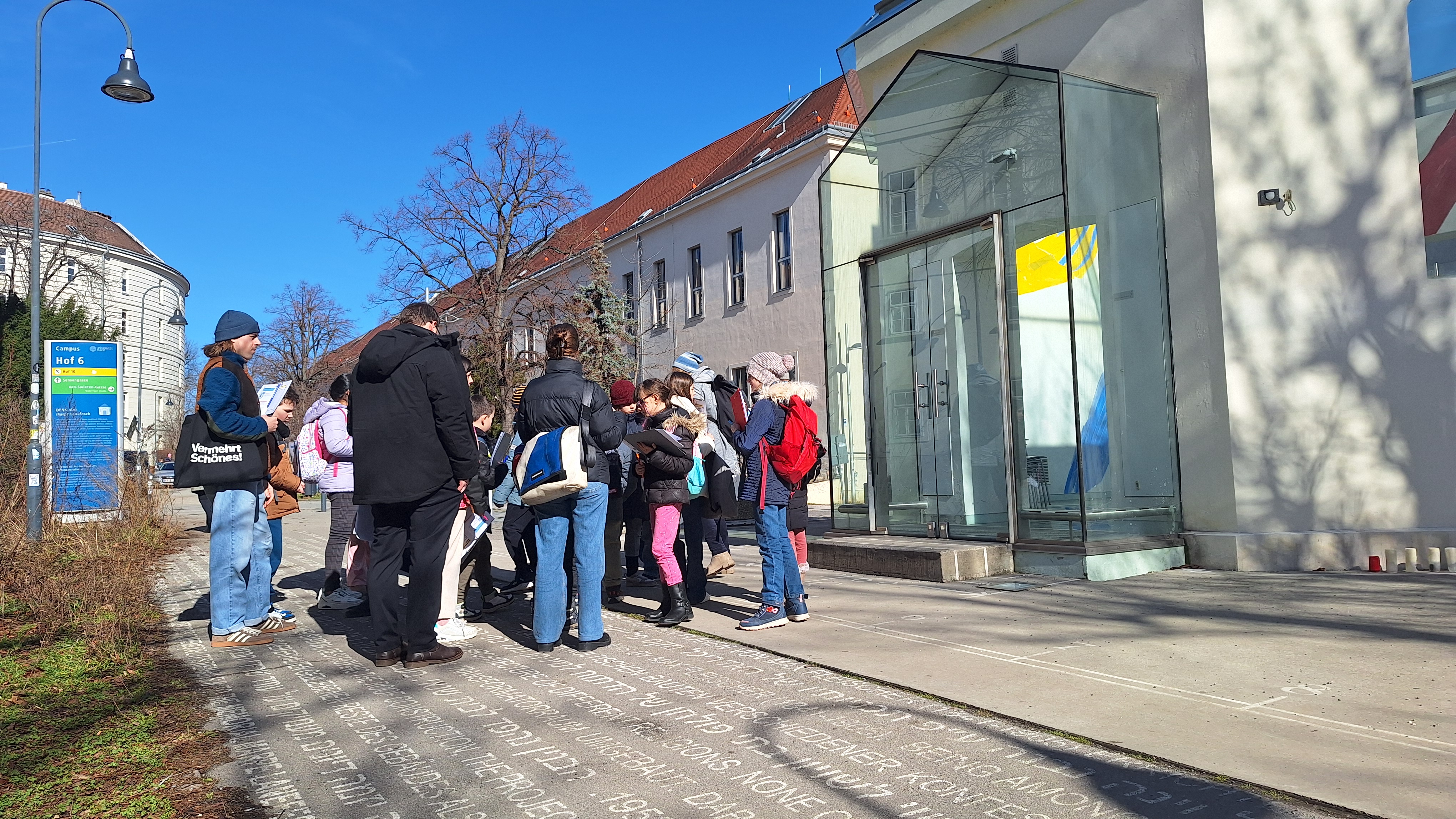
This idea led to the development of a “memory trail” that guides students across the campus. Using a map, they move from one station to another, discovering different forms of remembrance along the way.
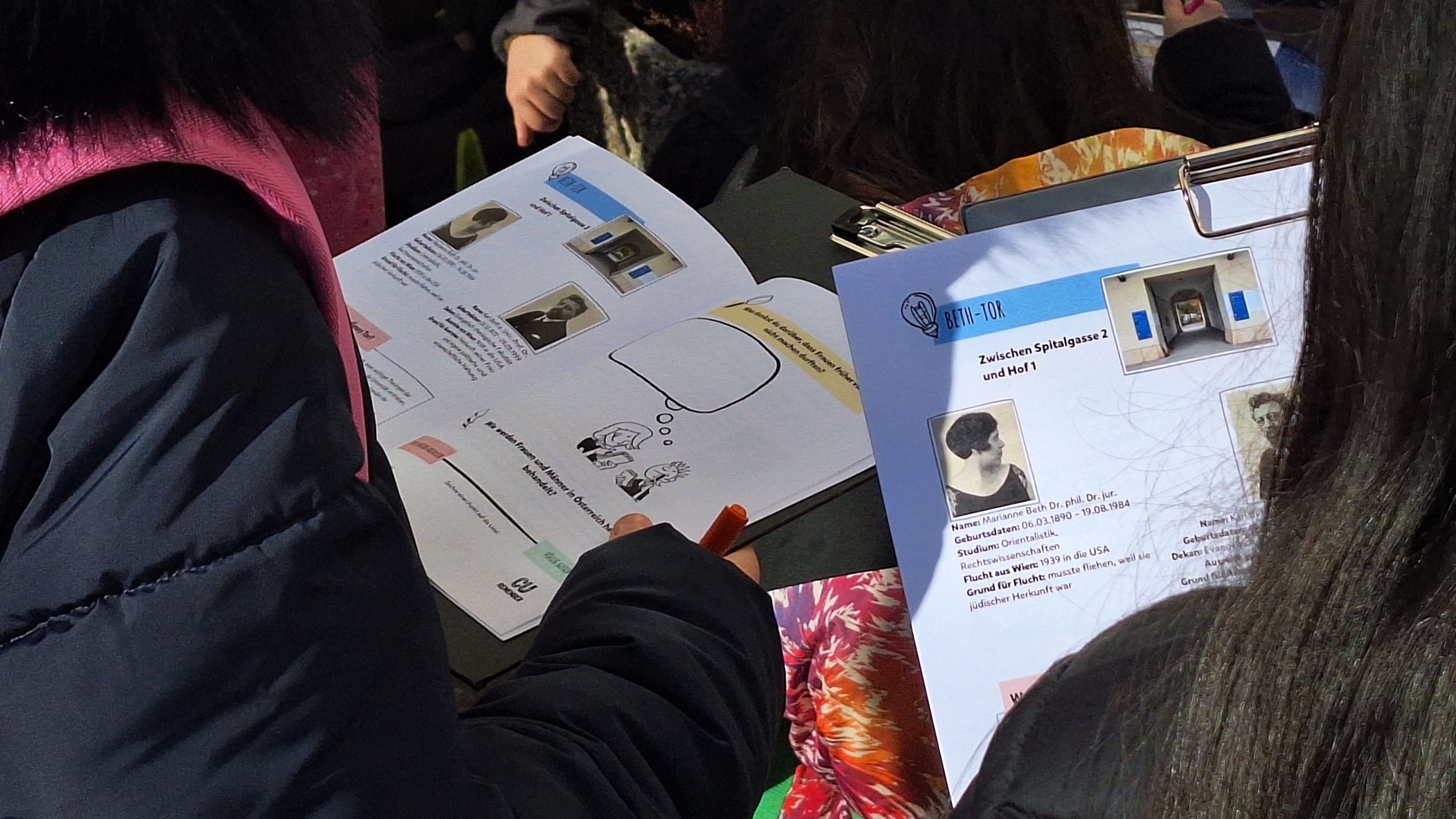
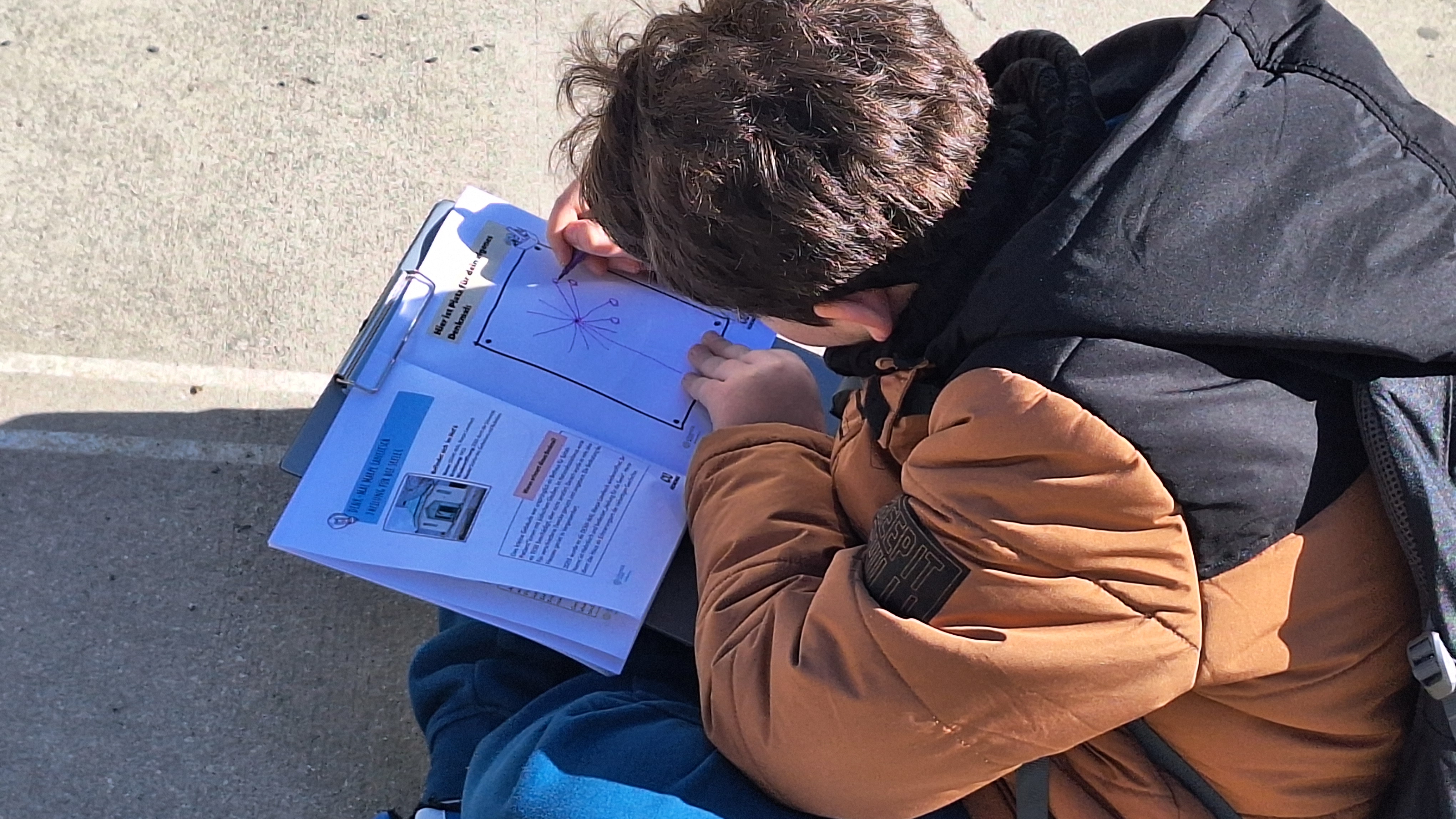
At the same time, it was important that they could take something personal away from the experience. To support this, a memory journal was created to accompany them throughout the tour. Each station has its own page with guiding questions and small tasks, allowing students to record their observations, thoughts, and impressions and reflect on them individually.
The Concept
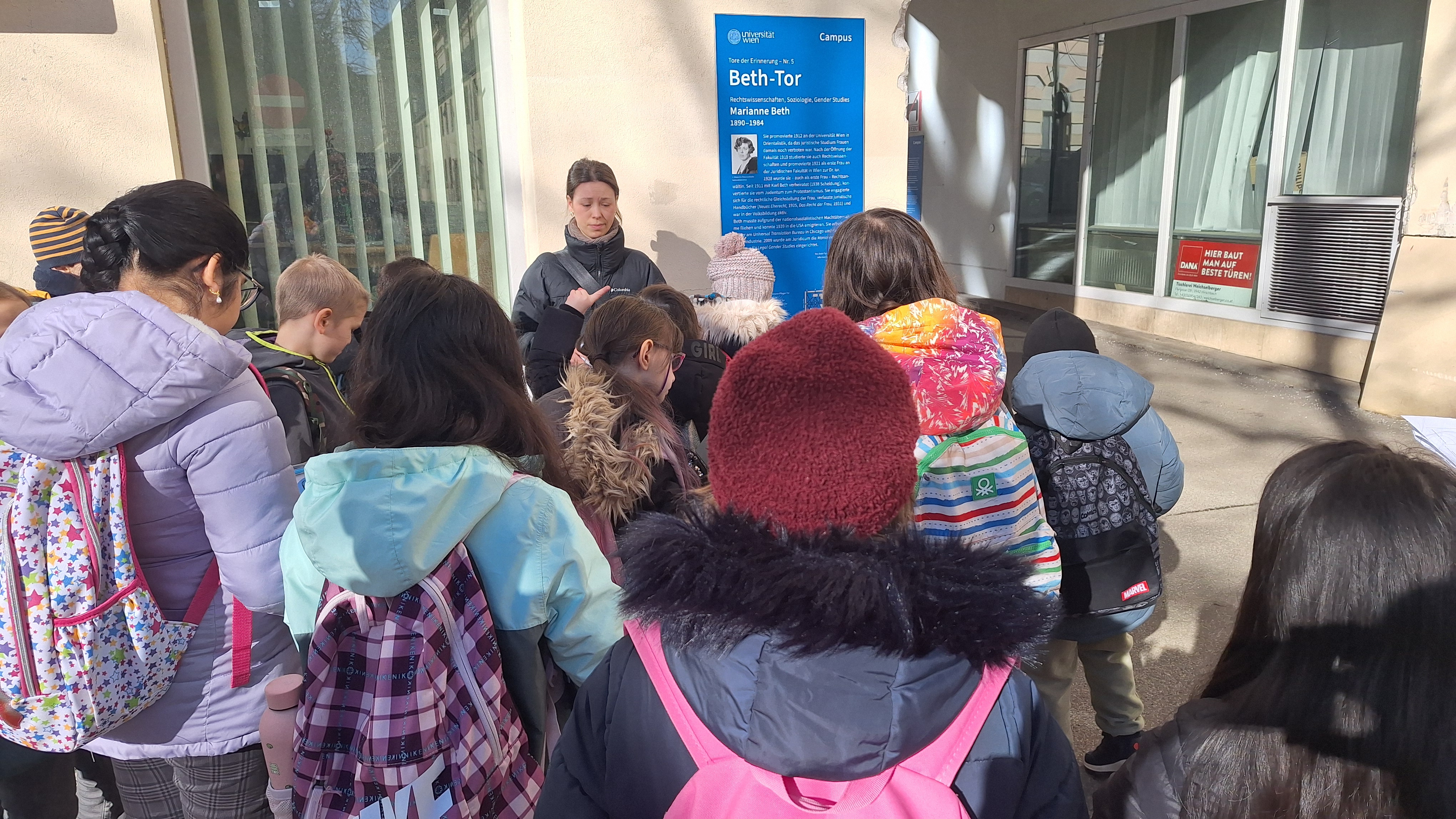
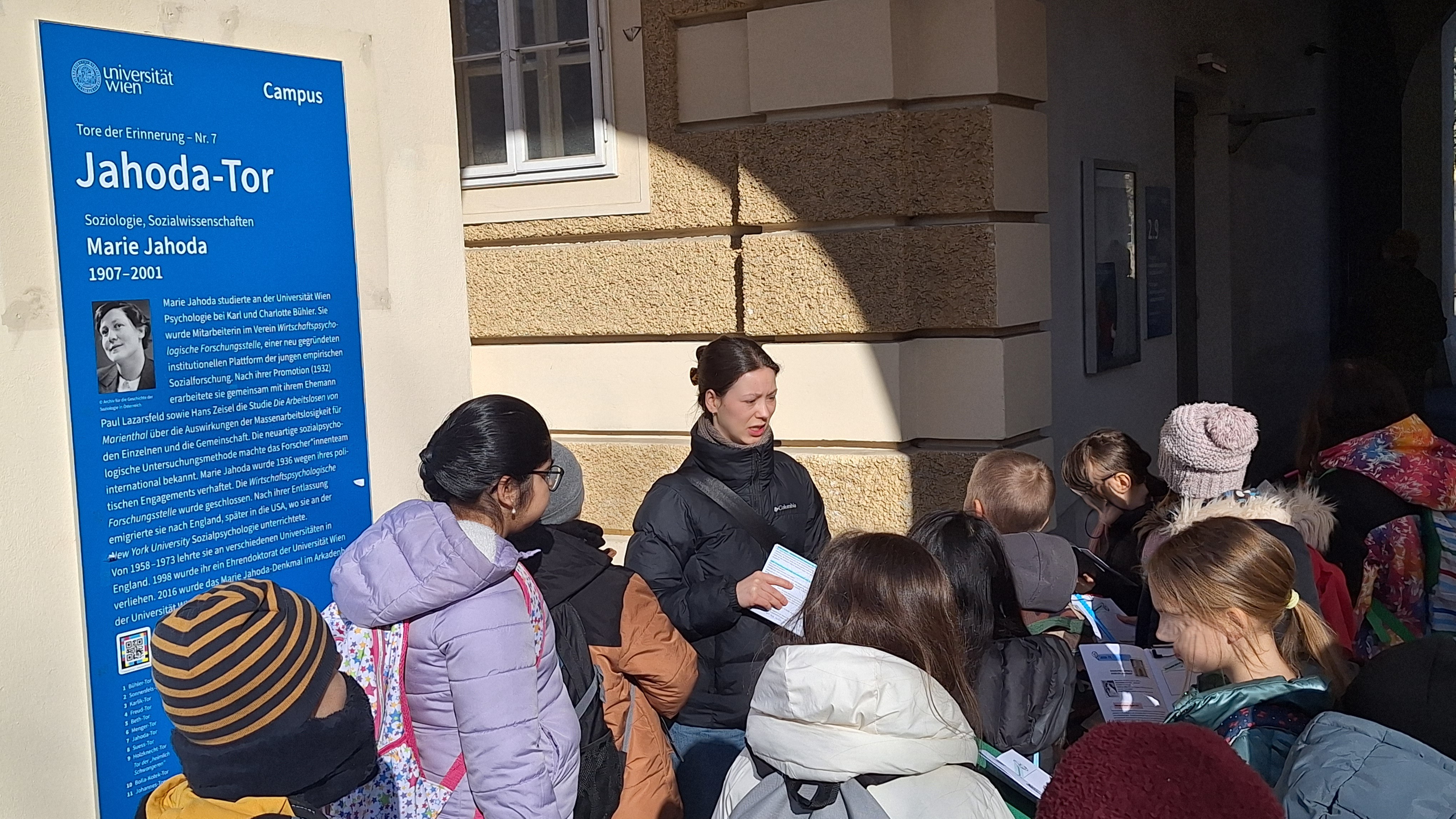
The tour focuses on four “Gates of Memory” as well as the Marpe Lanefesch memorial, which together highlight different facets of remembrance culture. The selected stations approach remembrance from various angles: the Marianne and Karl Beth Gate tells the story of exclusion from the university due to antisemitic persecution and political reasons. Marie Jahoda’s Gate highlights forced exile even before the Nazi period in Austria. The Gate of the Secretly Pregnant refers to a place of support for unmarried pregnant women giving birth in safety. The Piccolomini Gate reflects how historical figures can become part of institutional memory even when their actual relevance to the university’s history is limited. The DENK-MAL Marpe Lanefesch, a former Jewish prayer house, was desecrated during National Socialism and has served again as a site of remembrance and thought since 2005.
At each station, students are first encouraged to observe their surroundings. This is followed by a short historical input and a task in their memory journal. The questions are designed to connect historical content with the students’ own perspectives. For example, at the station Marianne Beth, students are asked:
“What do you think about women not being allowed to do many things in the past?”
This creates a combination of observation, knowledge and active engagement. Through shared reflection, students contribute their own perspectives and actively shape the course of the tour. As a result, each tour unfolds differently.
What Should Be Considered in the Design Process?
A key consideration in designing the campus tour was presenting the topic in an age-appropriate way. Remembrance is a complex subject, often connected to difficult historical experiences. It was therefore important to make the content understandable without overwhelming the students. At the same time, the tour aims to highlight the importance of engaging with the past – even when it is not always easy. For this reason, particular emphasis was placed on stories of survivors.
Language also played a crucial role. Terms such as “National Socialism” needed to be explained in a way that was accessible to children without losing their meaning.
Another important aspect was the design of the tasks in the memory journal. These were intended to actively engage students without being too simple or too demanding. To ensure flexibility for different age groups and levels of prior knowledge, additional tasks were developed that can be used as needed during the tour.
All images by © Chris Gary