
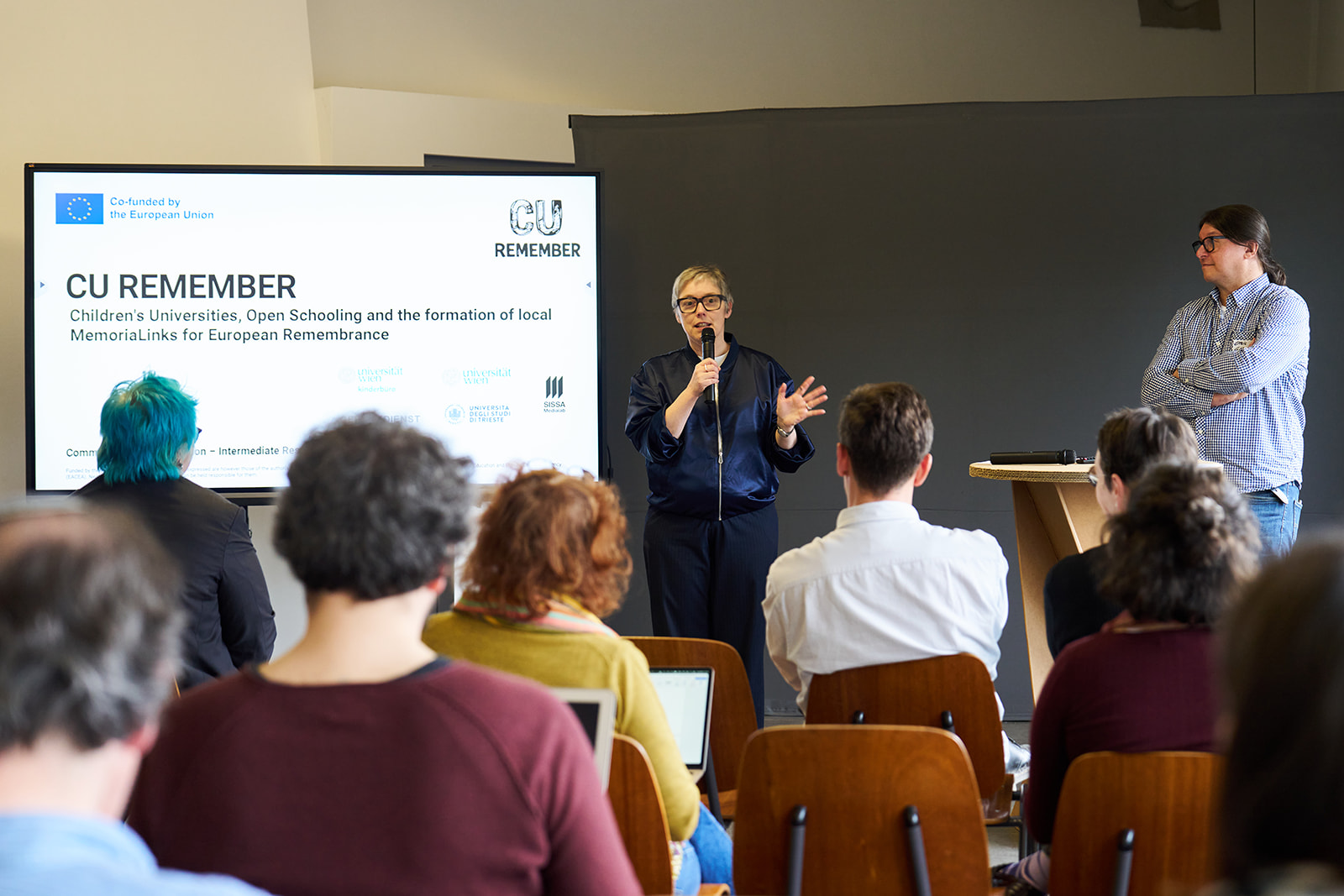
On 20 April 2026, project partners, educators, researchers and stakeholders gathered at the DOCK in Vienna for the CU REMEMBER Interim Conference. As the project reaches its midpoint, the event provided an opportunity to reflect on achievements so far, share emerging insights and discuss objectives for the next phase of the project.
Bringing together long-standing partners as well as new stakeholders, the conference created a space for dialogue, exchange and collaborative reflection on the future of remembrance education.
Remembering Interrupted Academic Lives
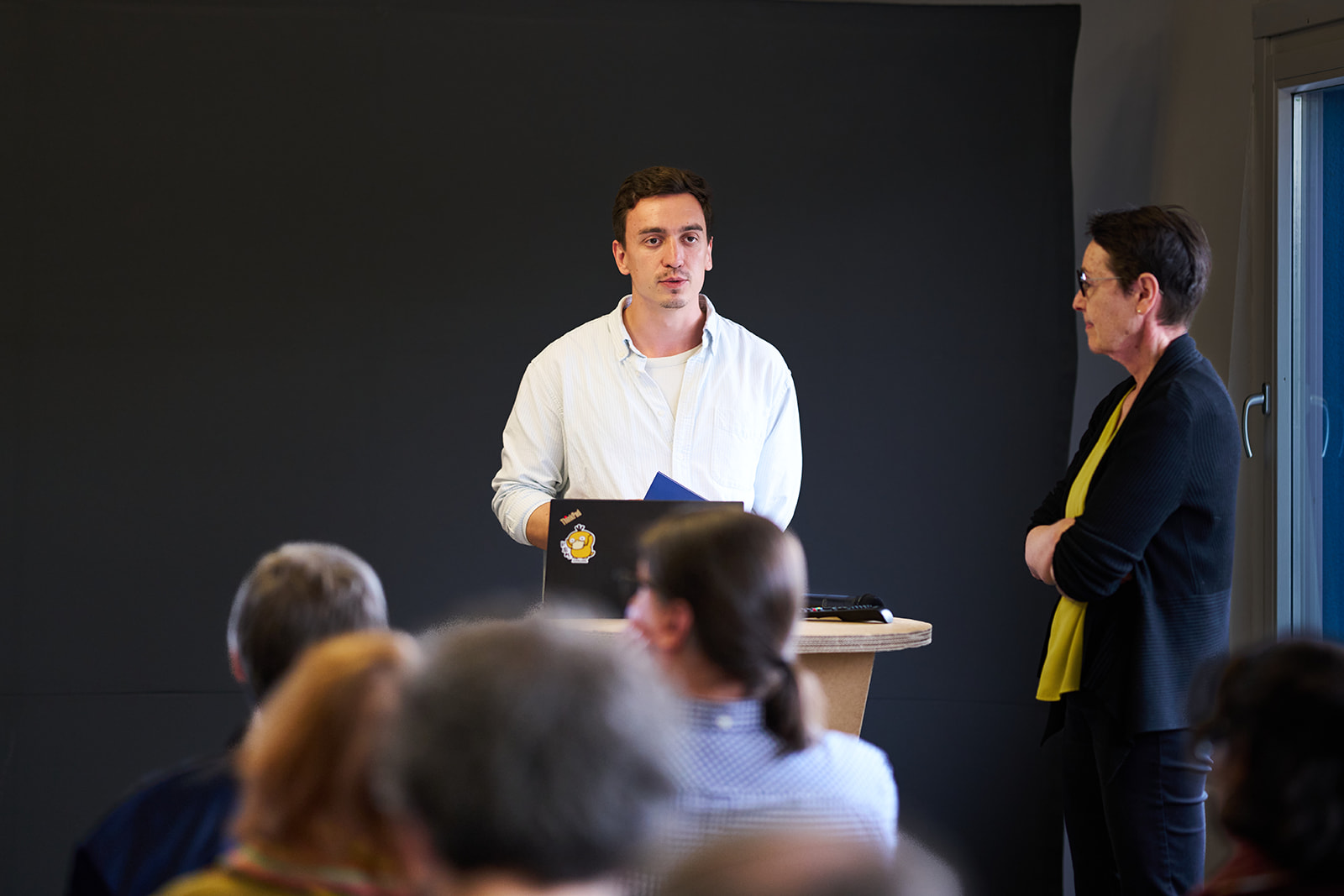
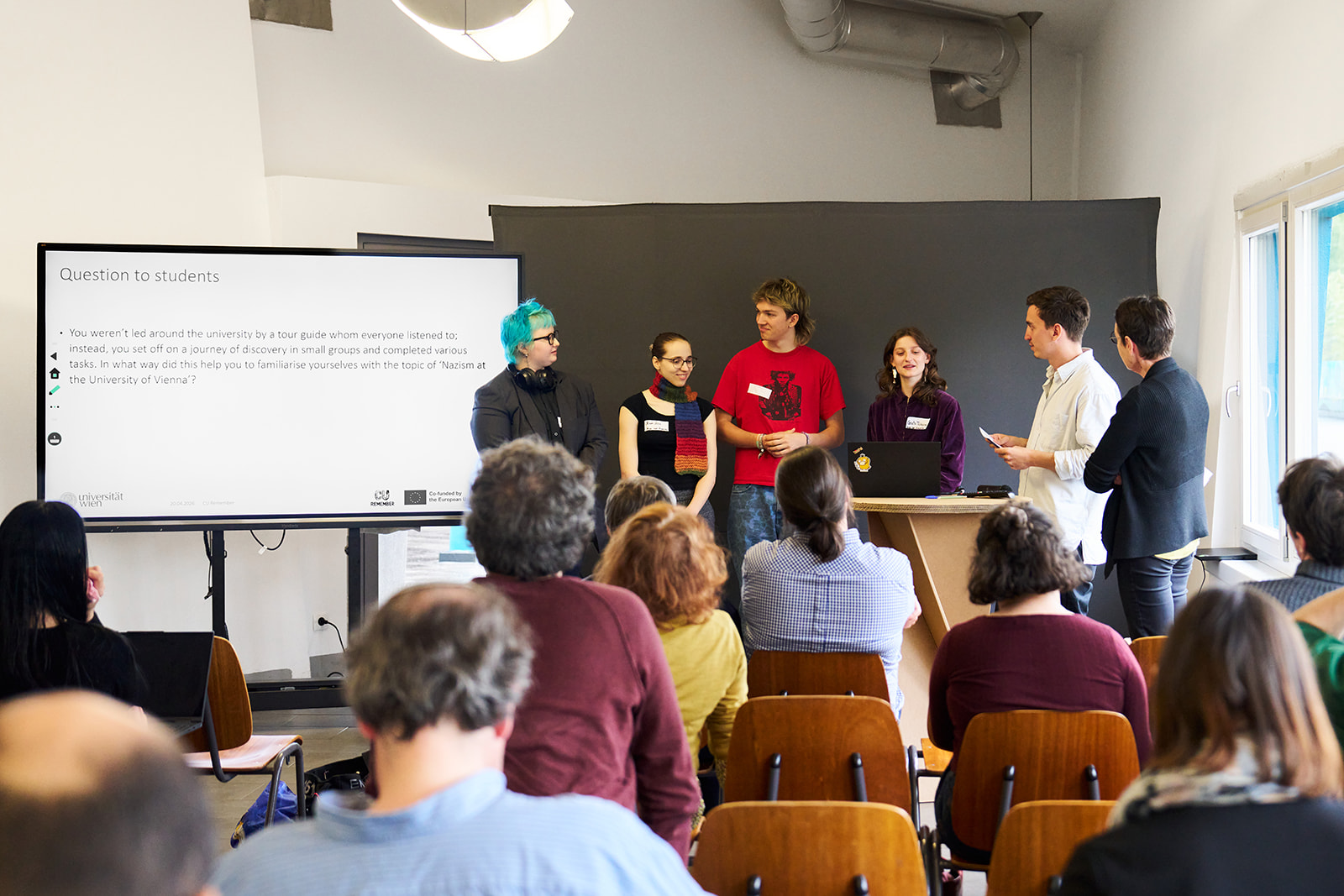
The conference opened with an impulse presentation by Veronika Schallhart and Thiemo Kronlechner from the University of Vienna. Their contribution, Interrupted Academic Lives: The Impact of the Nazi Era on the University of Vienna through Ten Biographies, highlighted how individual life stories can illustrate the broader consequences of exclusion, persecution and displacement during the Nazi period.
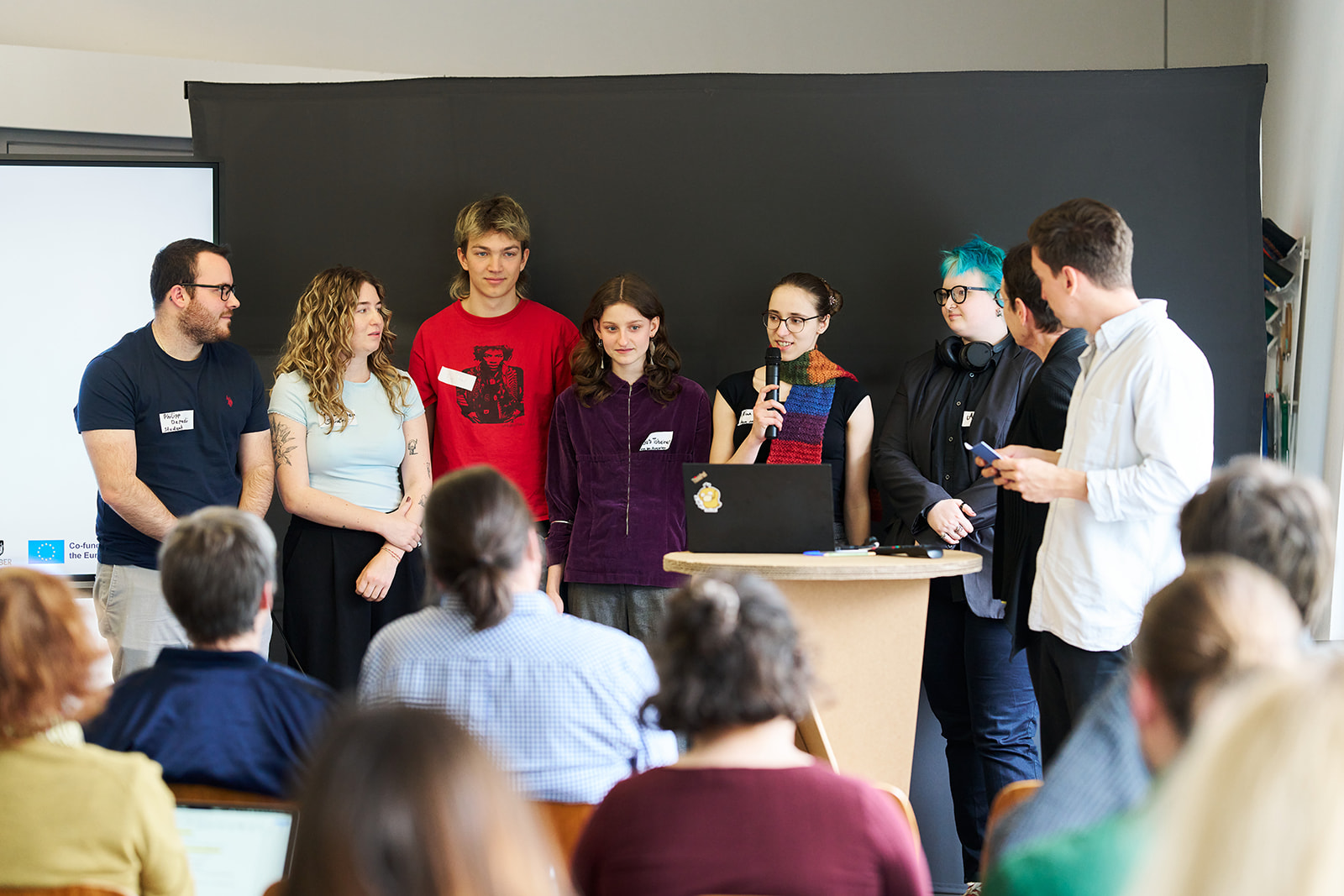
A particular highlight of the session was the contribution of four students from Gymnasium am Augarten who created one of the short videos about the ten biographies. The students shared insights into their research process, the challenges of translating historical biographies into engaging audiovisual narratives and the decisions they made in shaping the videos. Reflecting on their experiences, they offered a valuable perspective on how young people can actively engage with remembrance work and help make historical biographies accessible to a wider community.
Exploring Project Outcomes
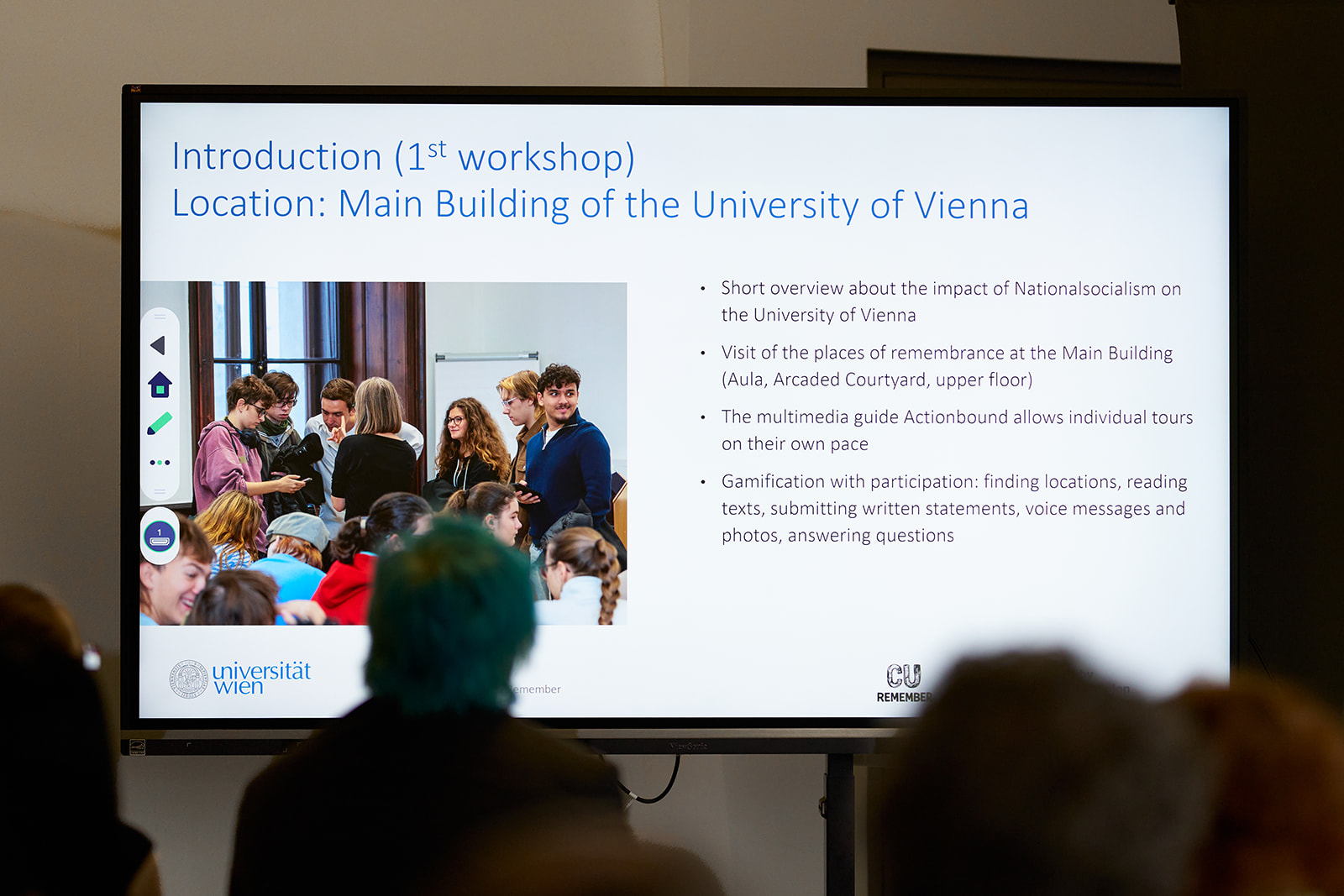
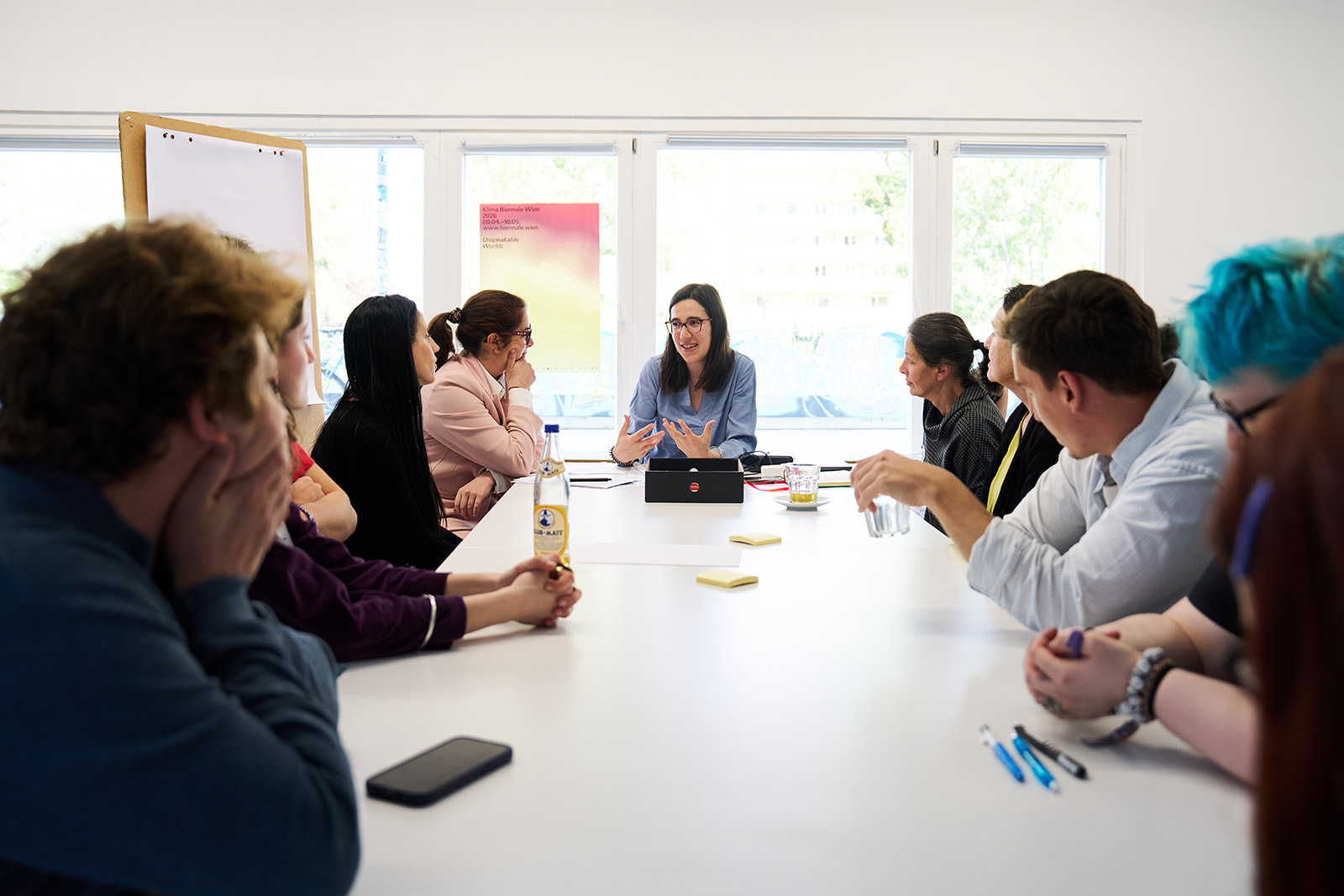
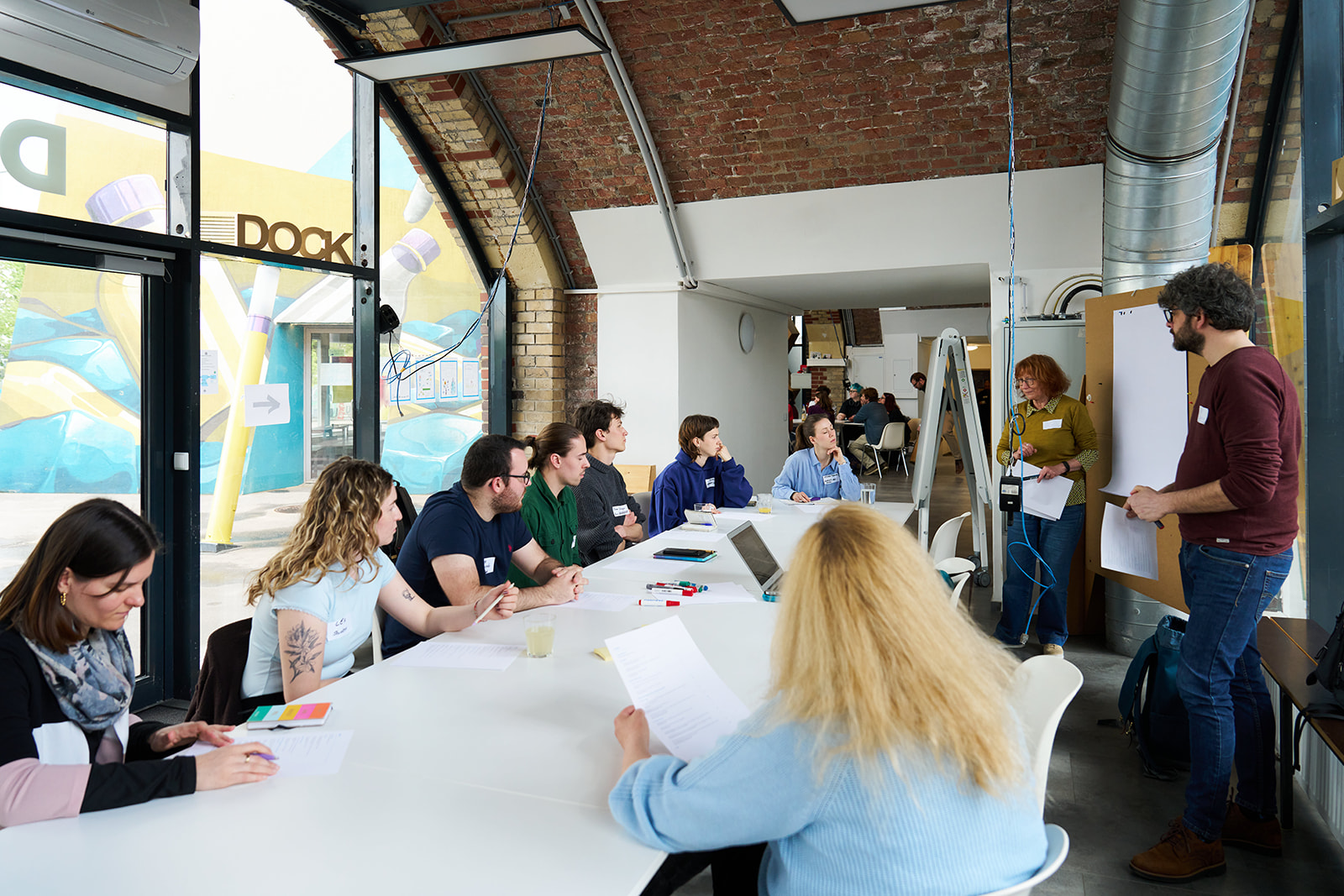
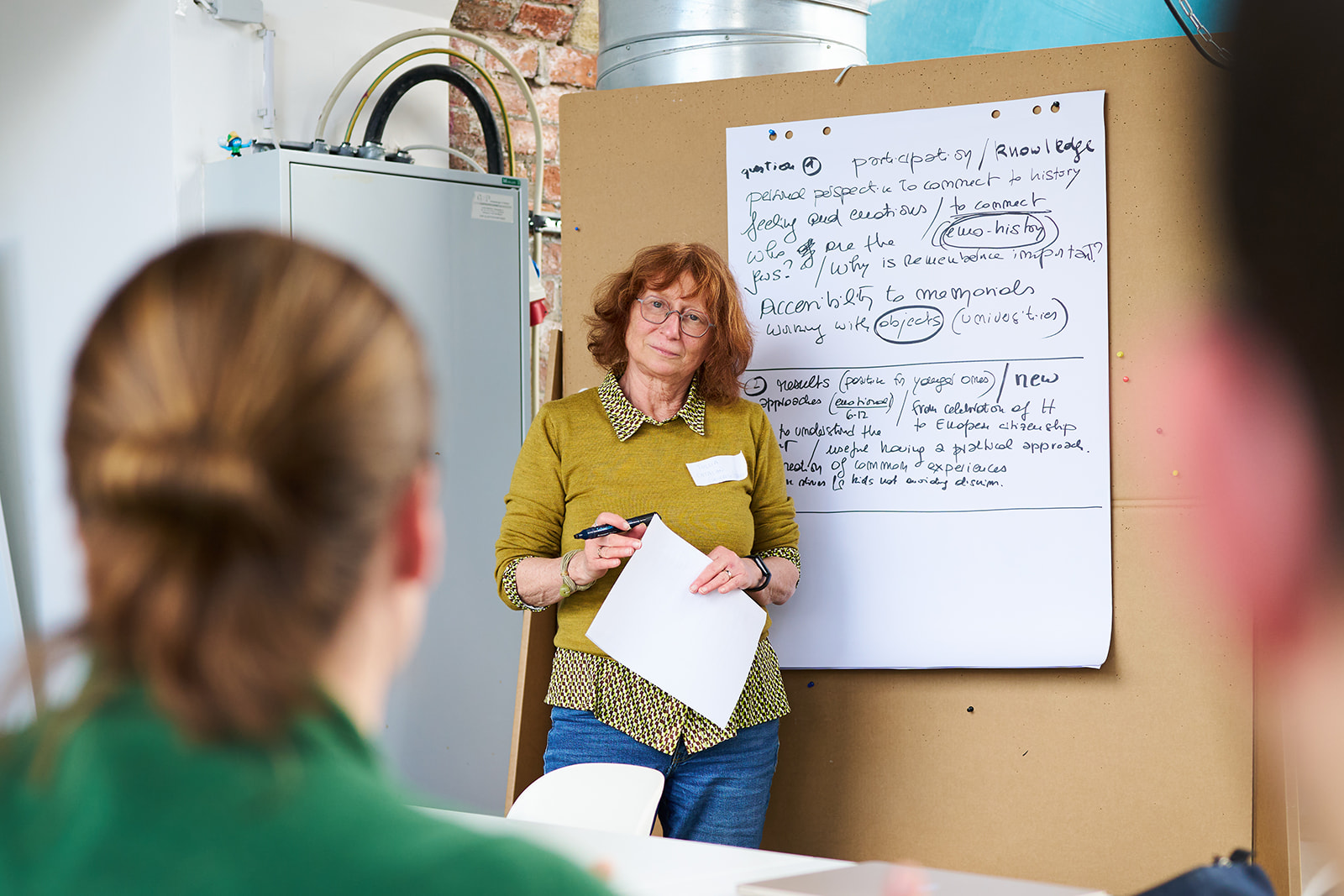
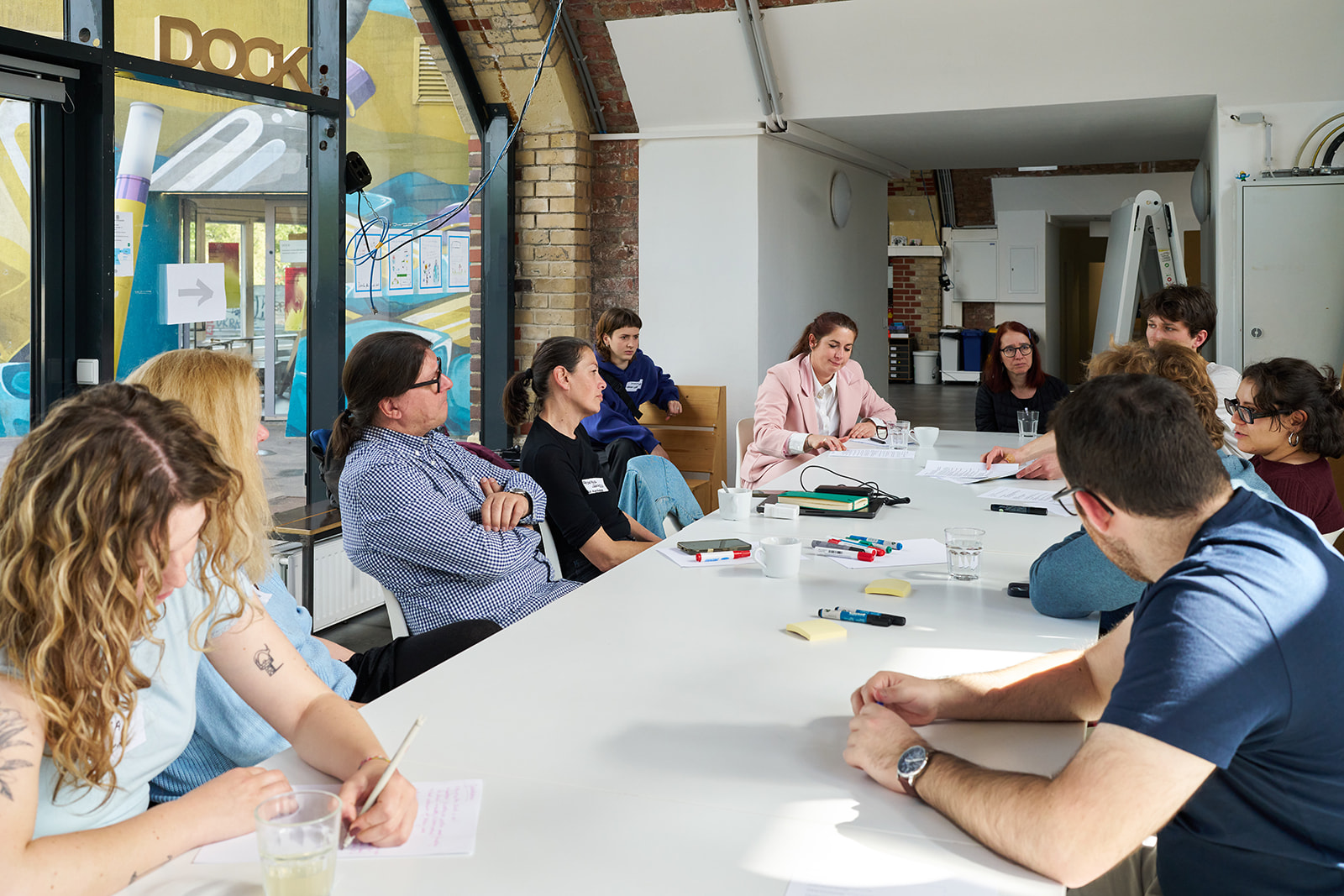
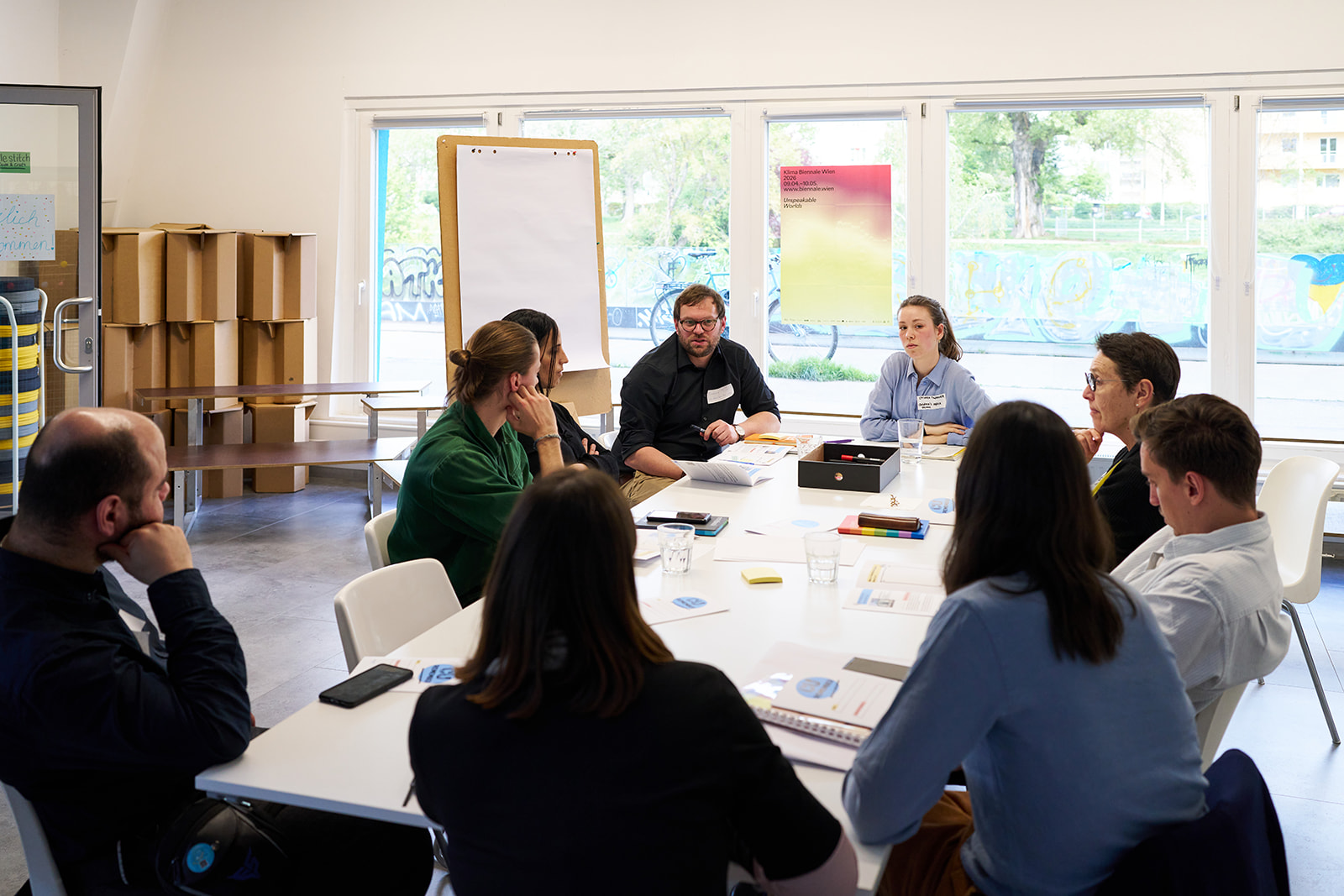
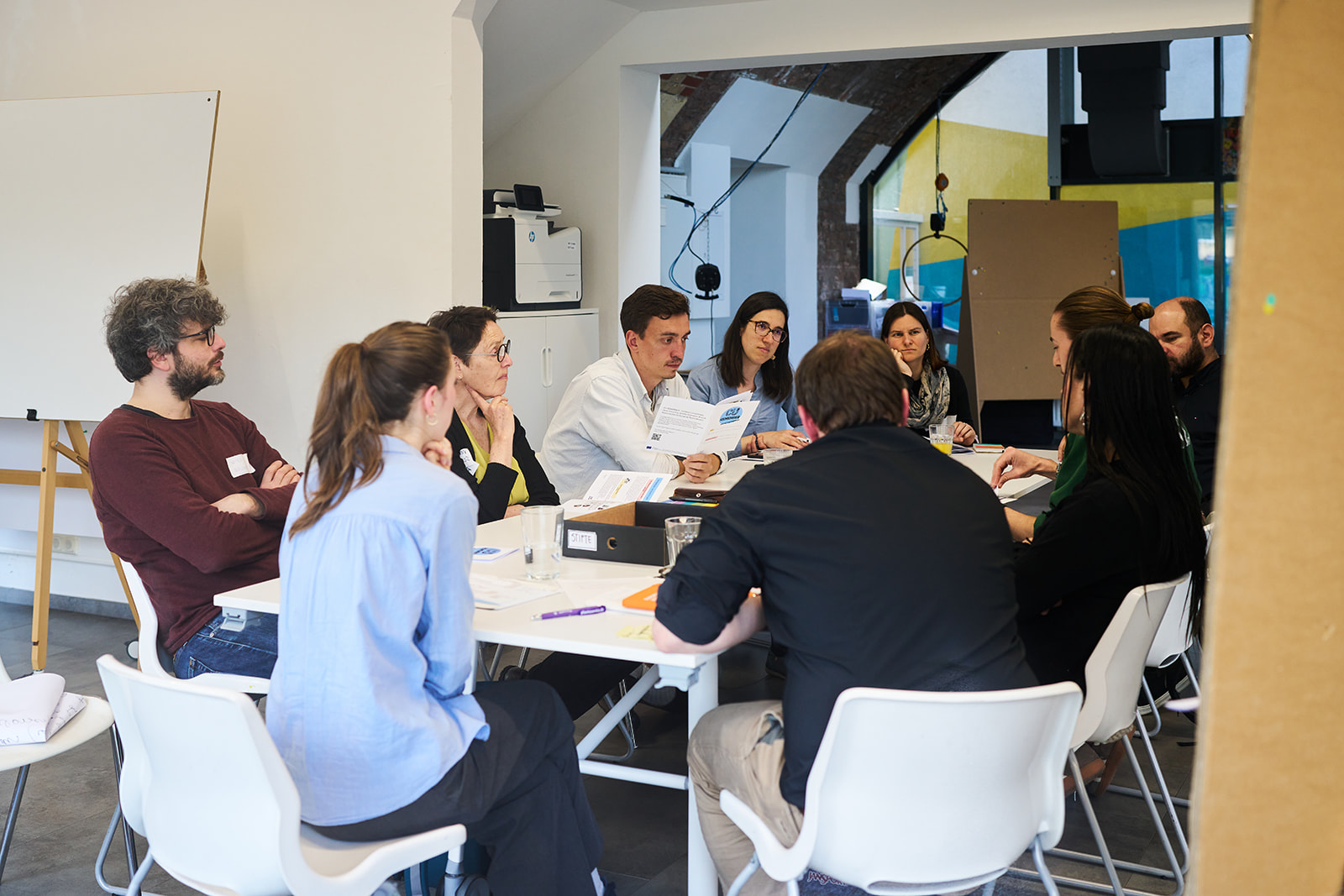
Following the opening keynote, participants joined two rounds of interactive group sessions that showcased the educational programmes and materials developed within CU REMEMBER.
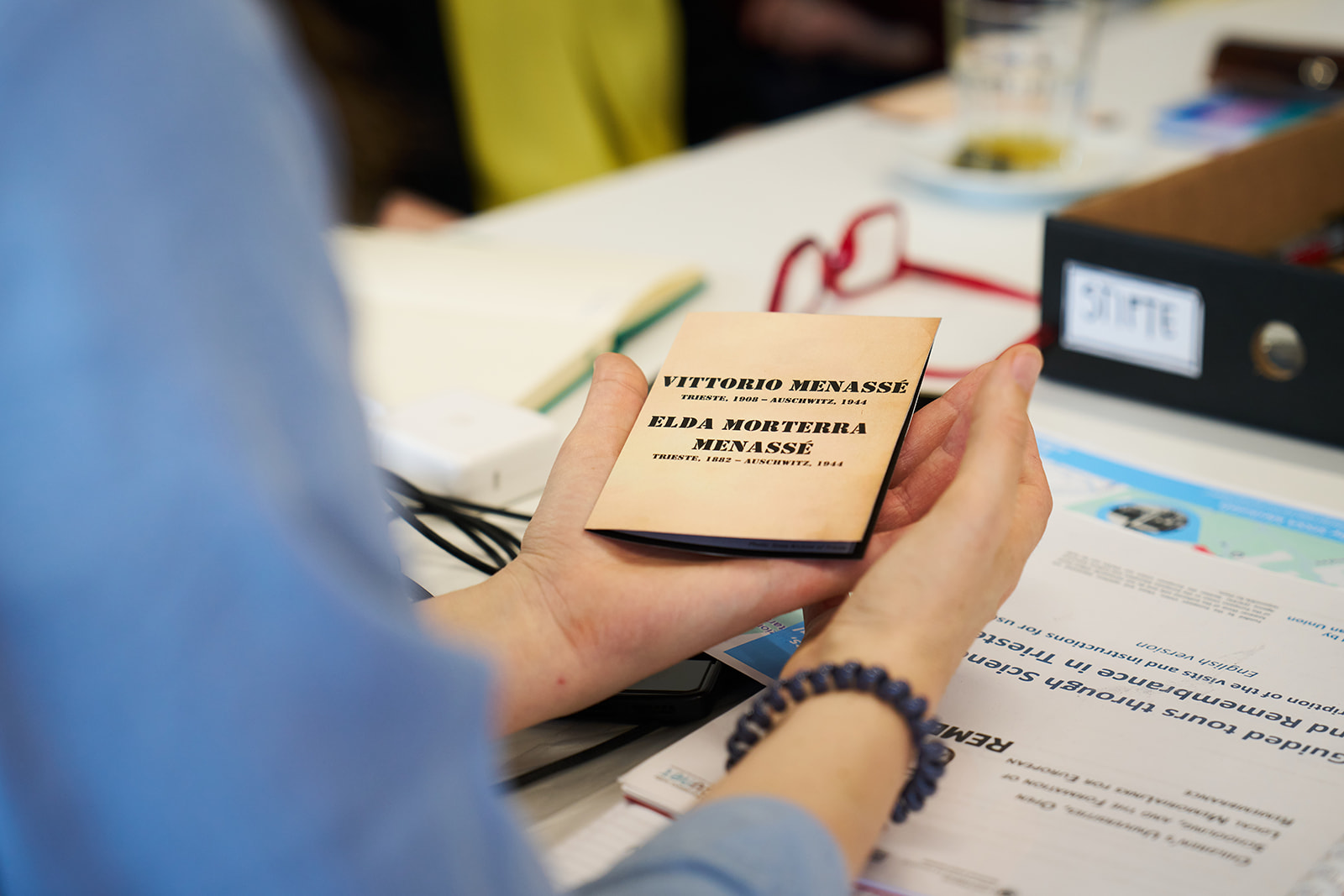
During the first round, participants could choose between two sessions: Session one focused on Holocaust and Human Rights: A Guidebook for Educators, presenting practical resources and methodological guidance for teachers and education professionals. The second session explored Remembrance Education in Upper Secondary Schools, introducing the guided tours as interactive learning tools that combine scientific history and remembrance education in Trieste.
Throughout the conference, participants could also explore the whole series of videos on the ten biographies, created by students of Gymnasium am Augarten.
The group sessions encouraged dialogue, feedback and exchange among participants while highlighting the diversity of educational approaches developed within CU REMEMBER.
Digital Pathways for Future Generations
In the second impulse presentation, Ela Luria from the Centre for Teacher Education at the University of Vienna addressed the role of digital technologies in remembrance education. Her presentation, Preserving Holocaust Memories for Future Generations through Virtual Reality: Harnessing the Power of Digital Education, explored how immersive technologies can create new opportunities for learning and engagement.
The discussion highlighted both the potential and the responsibility that come with digital remembrance practices, particularly in ensuring that future generations continue to engage meaningfully with historical memory.

Key Learnings and Next Steps
Throughout the afternoon, one message emerged clearly: remembrance education benefits from interdisciplinary collaboration and diverse perspectives. The conference demonstrated the value of bringing together researchers, educators, students and community stakeholders to develop innovative and inclusive approaches to learning about the past.
As CU REMEMBER moves forward, the insights shared during the Interim Conference will serve as an important foundation for the work ahead.
All images by © Markus Korenjak