by Thomas Troy and Chris Gary [Vienna University Children’s Office]
What do we remember? Which memories are we carrying with us and which stories are passed on from one generation to the next?
During this year’s Children’s University, the project team created a Memory Wall inviting children, parents, grandparents and researchers to share their personal memories. Structured around four simple categories, Objects, Time, Places and People, the Memory Wall became a space for collecting memories, sharing stories and discovering different perspectives on the past.
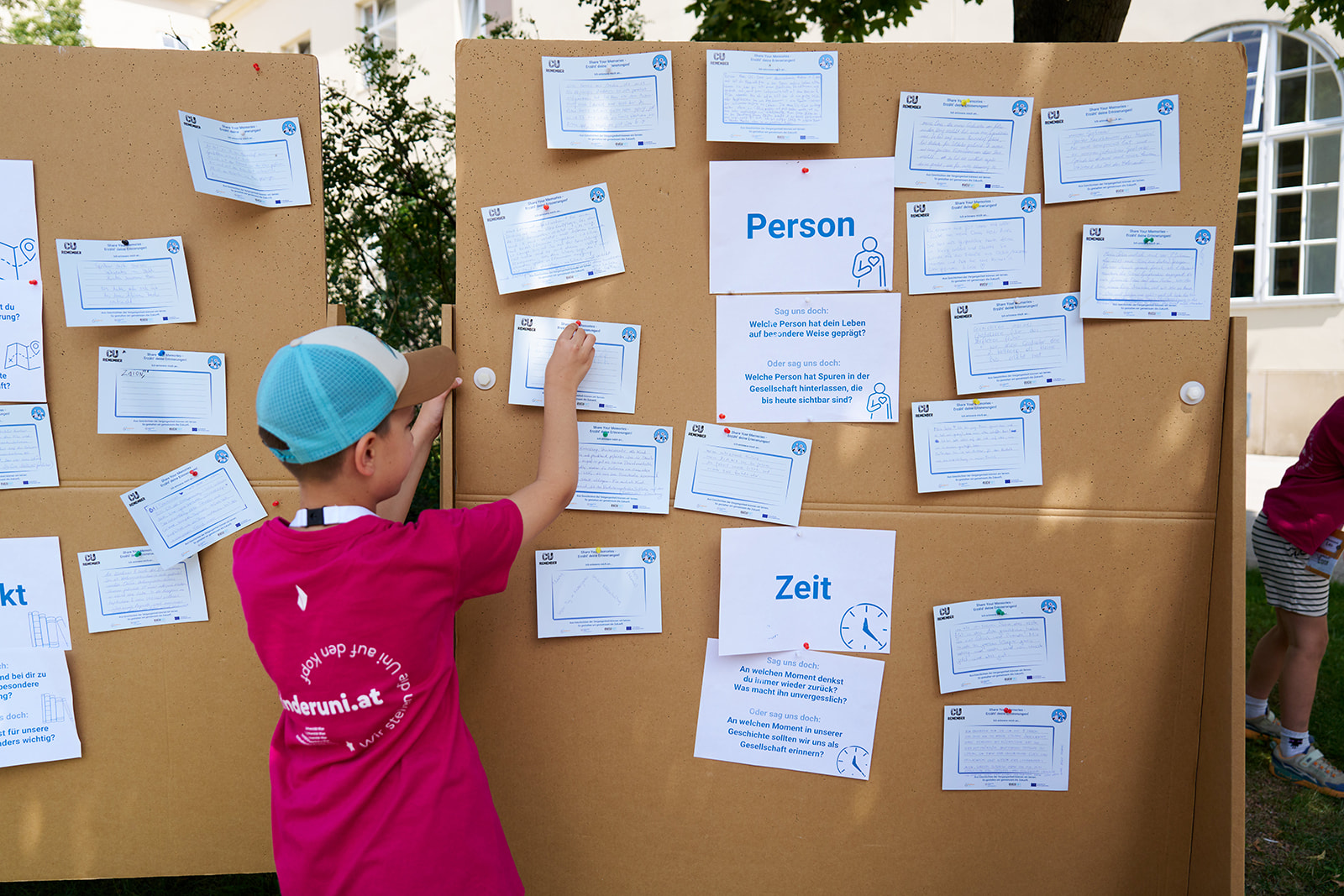
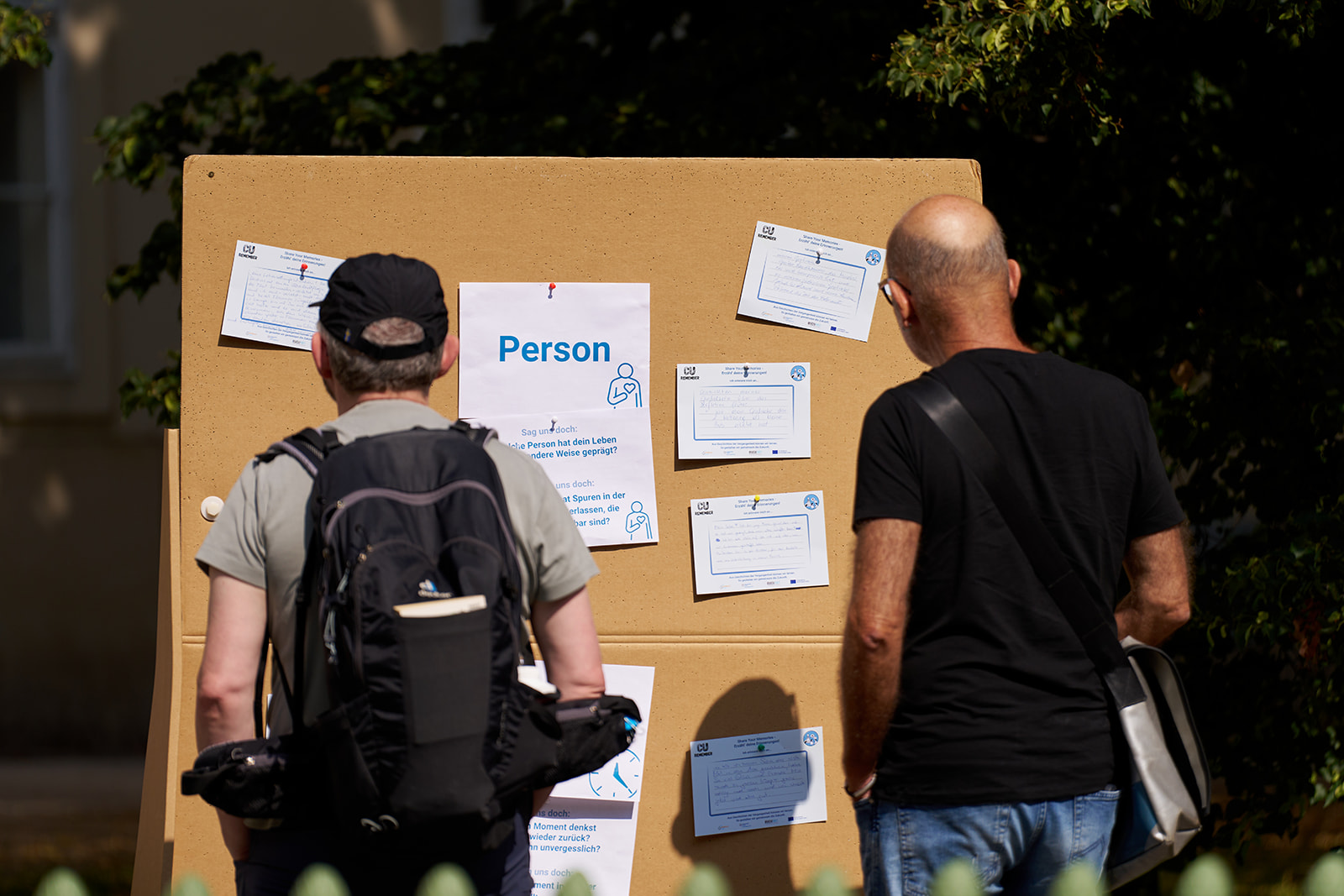
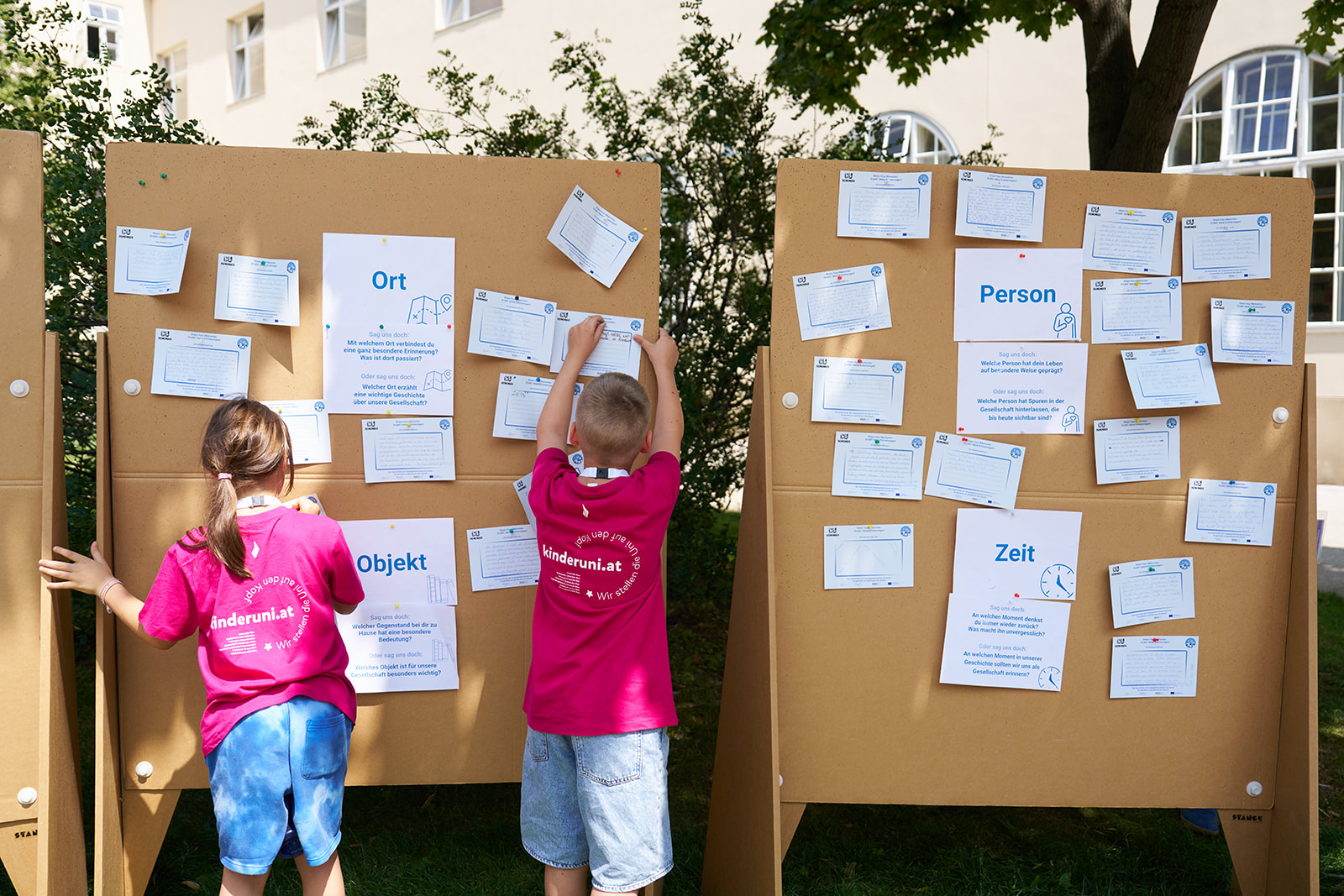
Many different memories
The contributions collected reflect a remarkable diversity of personal, family and collective memories. From stories passed down by grandparents to experiences of studying at Universities, memories of the war in the Balkans and first experiences as refugees in Austria, as well as memories connected to special moments in life.
The following contributions are a selection of all the memories shared on the Memory Wall:
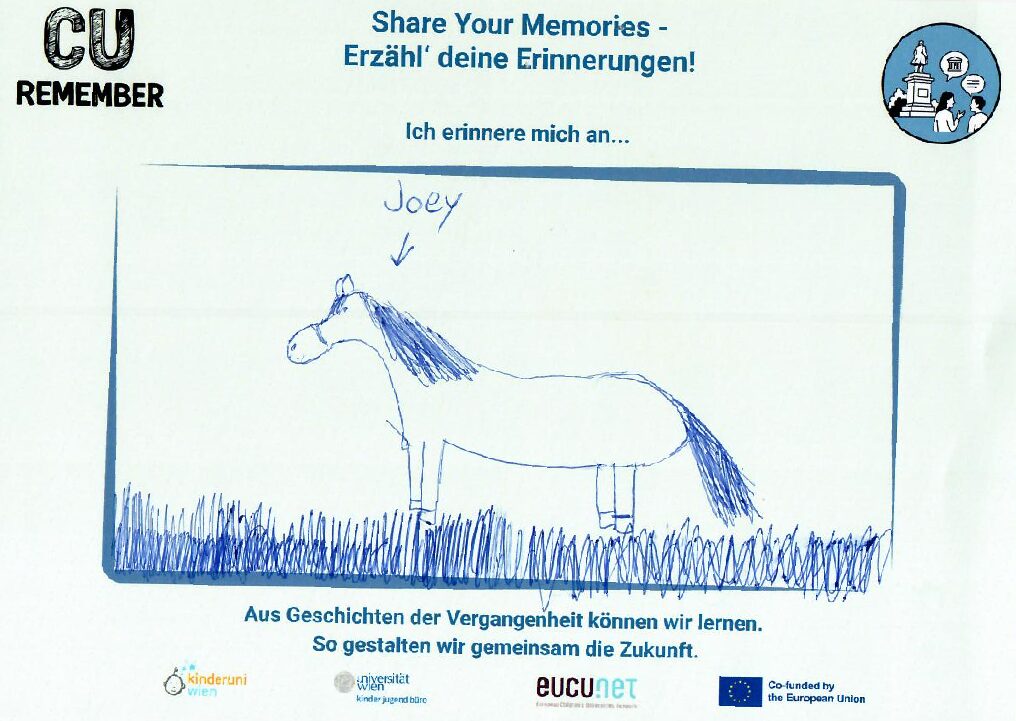
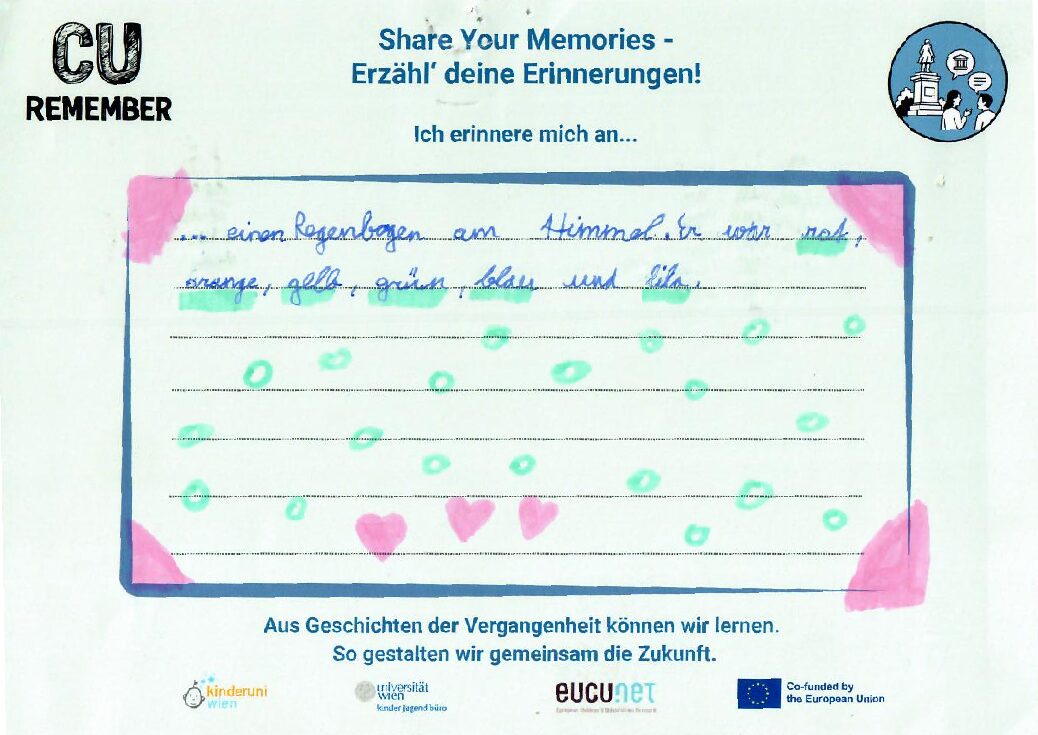
Objects
Two simple drawings, created by children. The contributions show how memories can be connected to seemingly ordinary objects and images, and how differently children choose to express what is meaningful to them.
Time
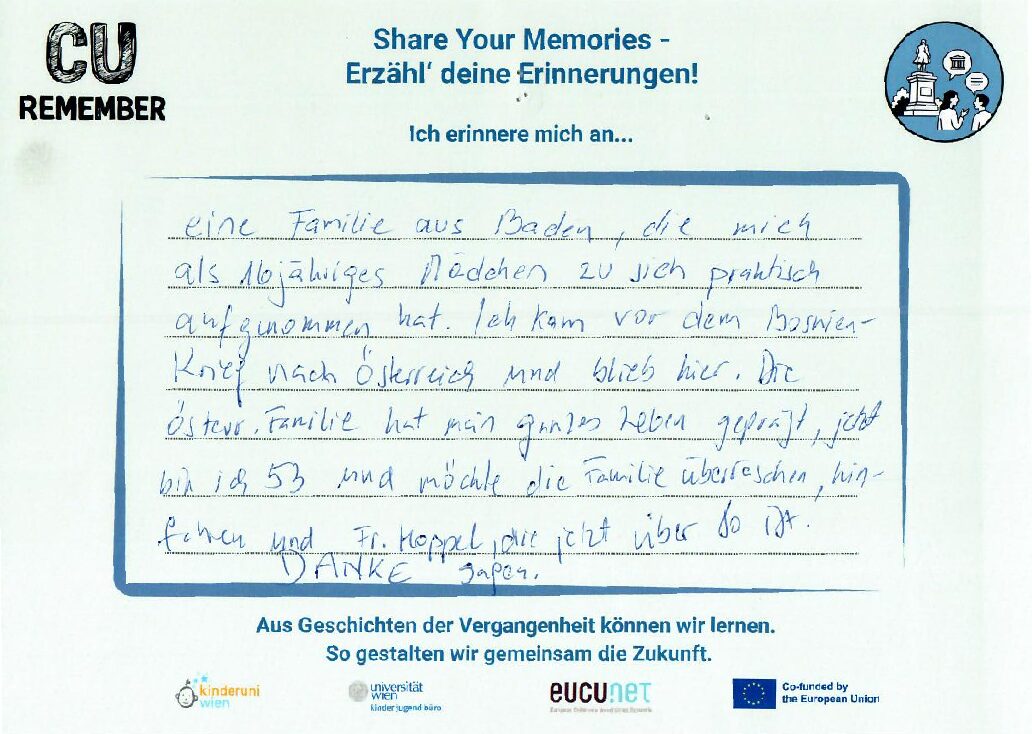
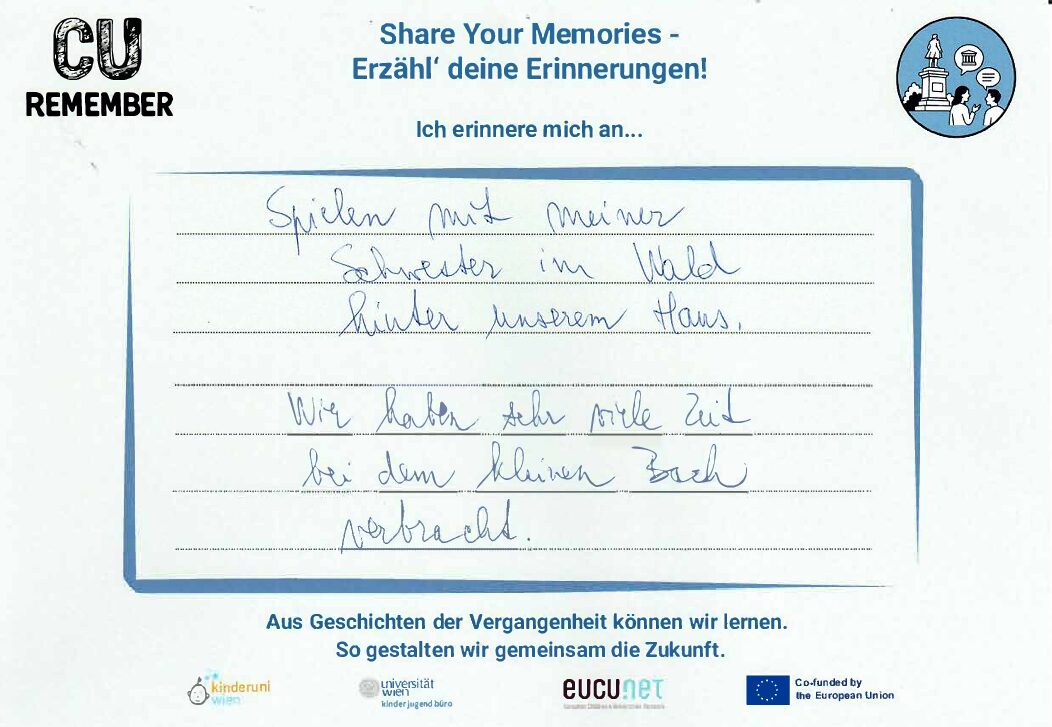
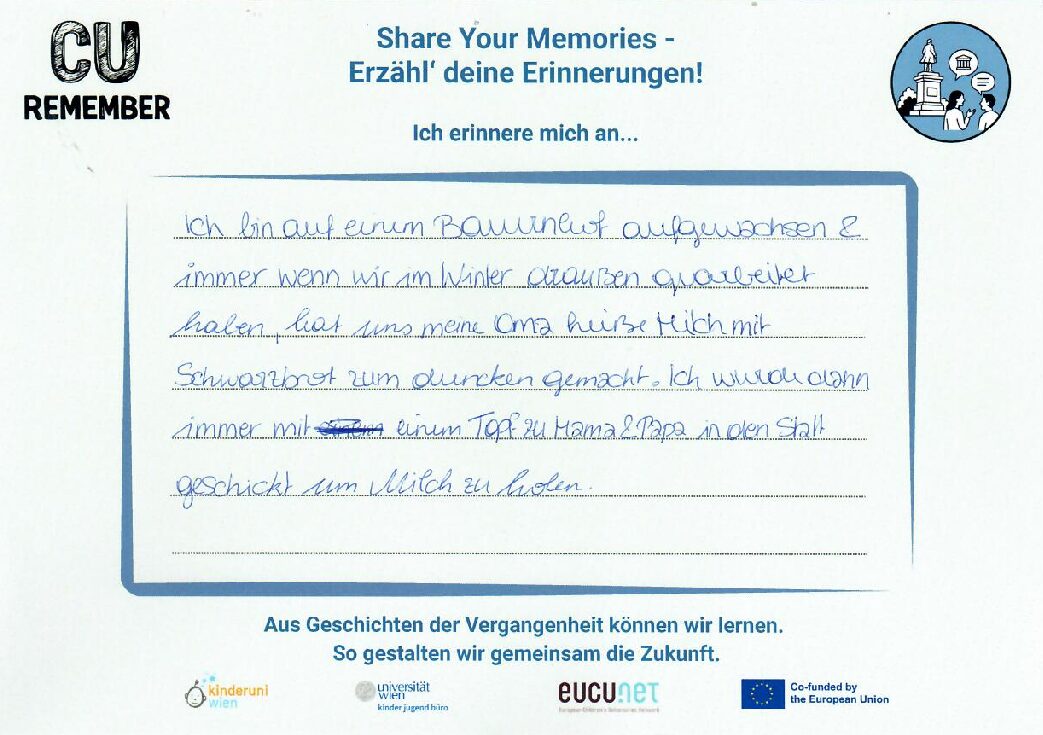
Some memories take us back to a particular moment in our own lives. Others open a window onto a different historical period. The contributions range from student life in a hopeful, increasingly connected Europe, to memories of arriving in Austria as a refugee child after the war in the Balkans, and childhood memories.
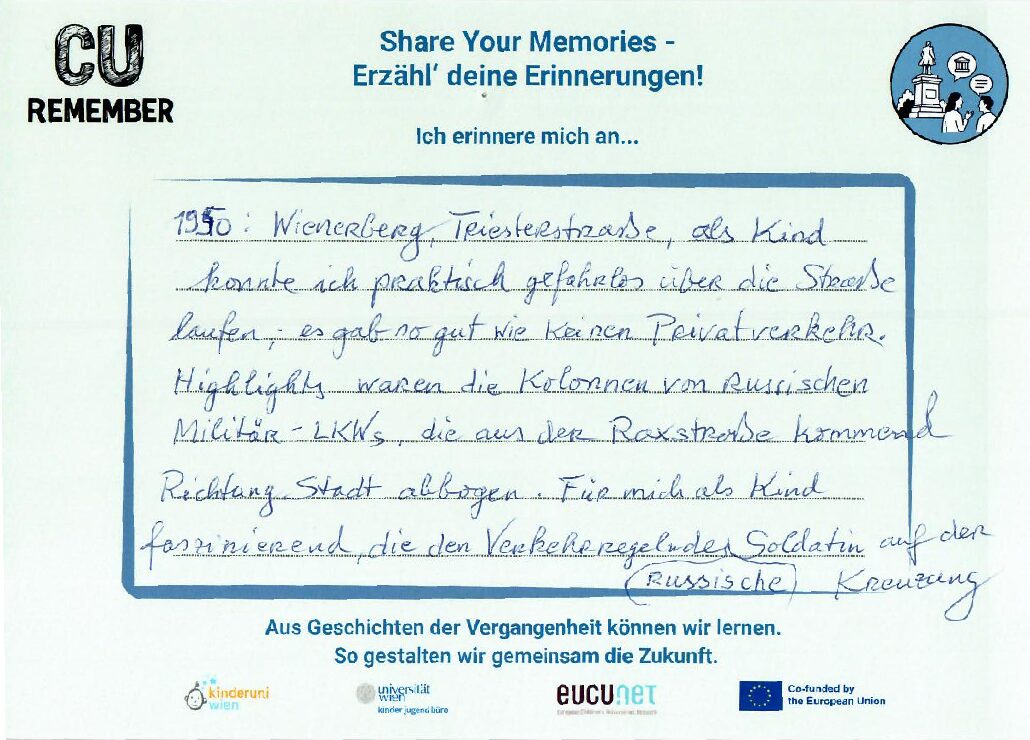
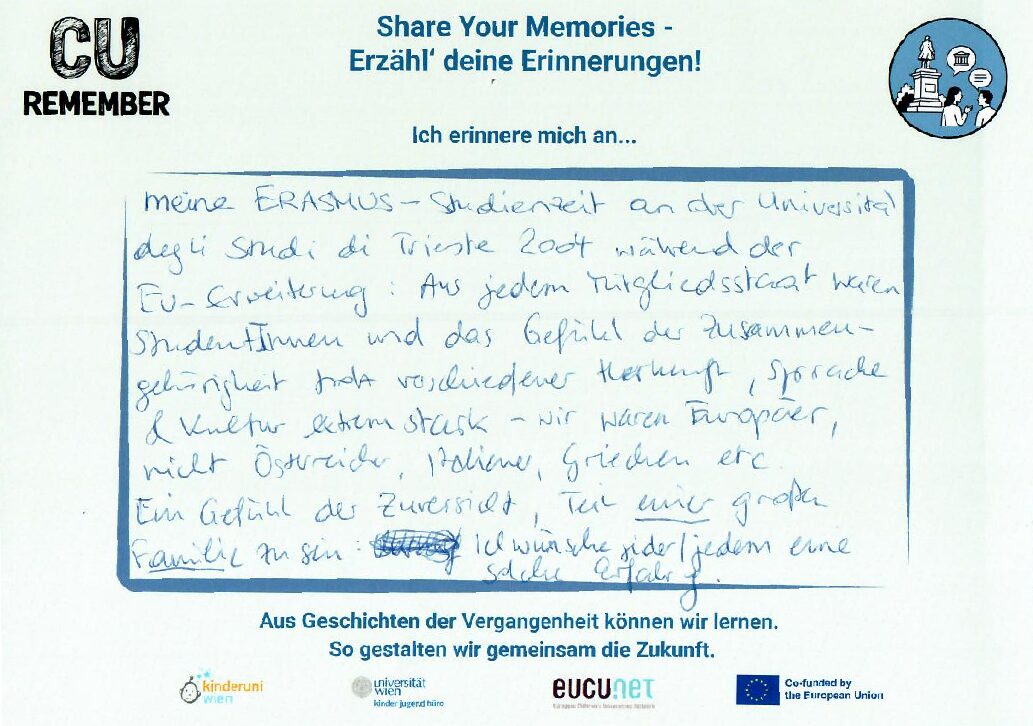
Places
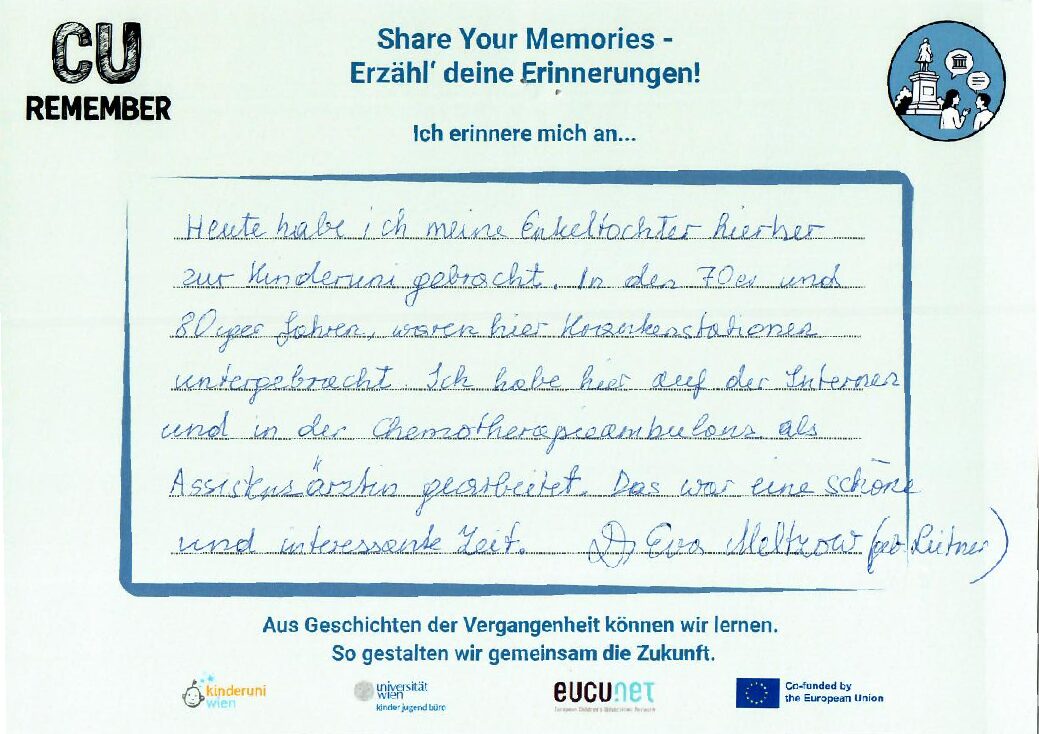
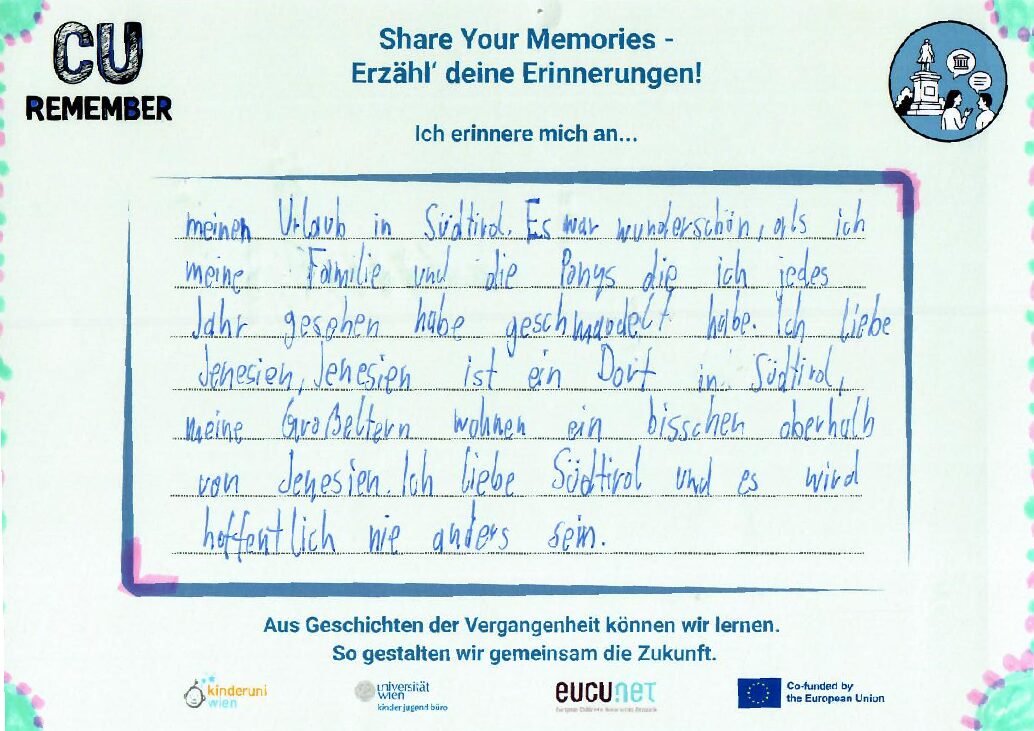
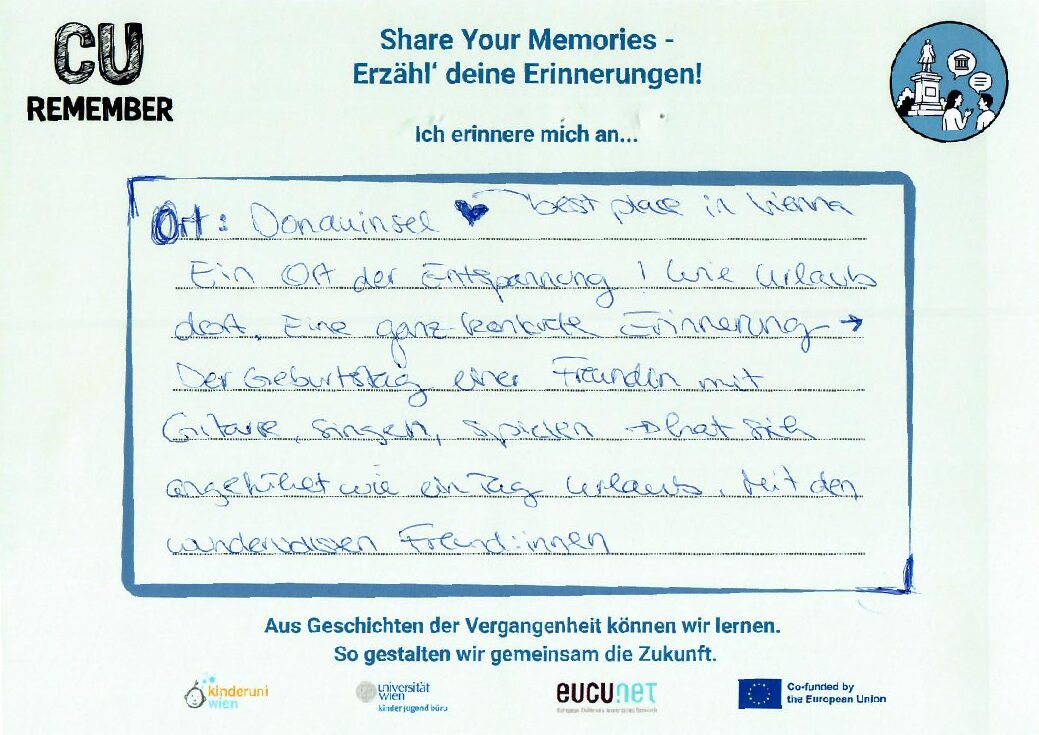
Places can hold memories of everyday life, family and change. The contributions take us from the Danube Island – a place for relaxation and meeting friends – to the site of today’s Children’s University Vienna, which once housed a hospital, and to a place in South Tyrol where grandparents live
People
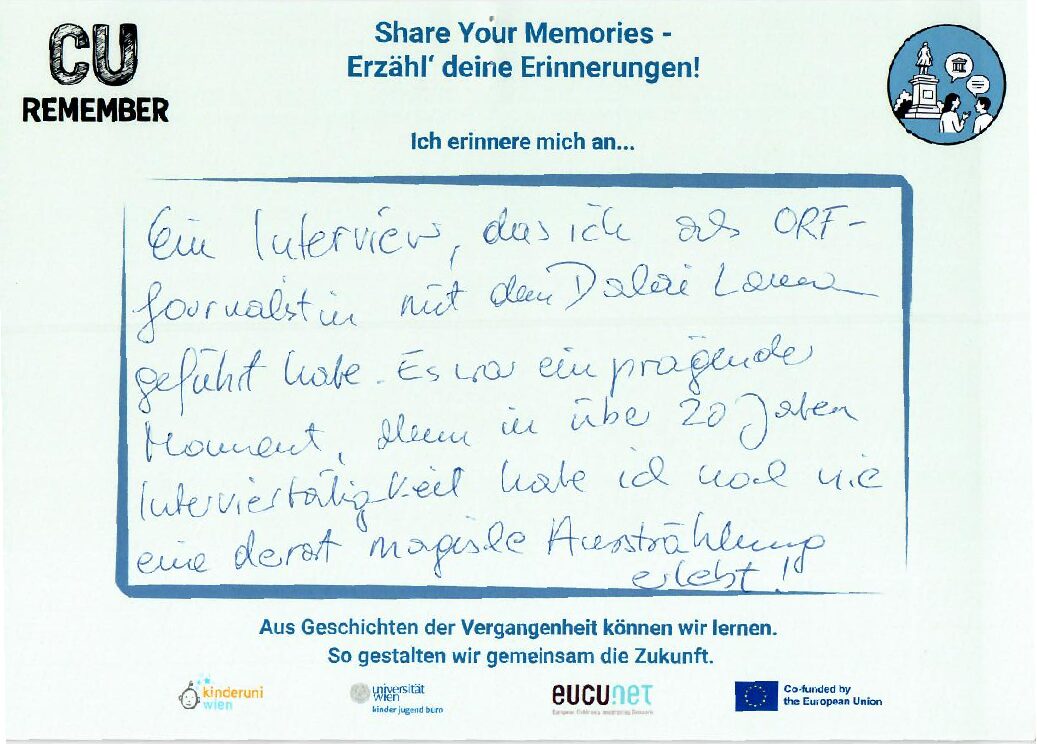
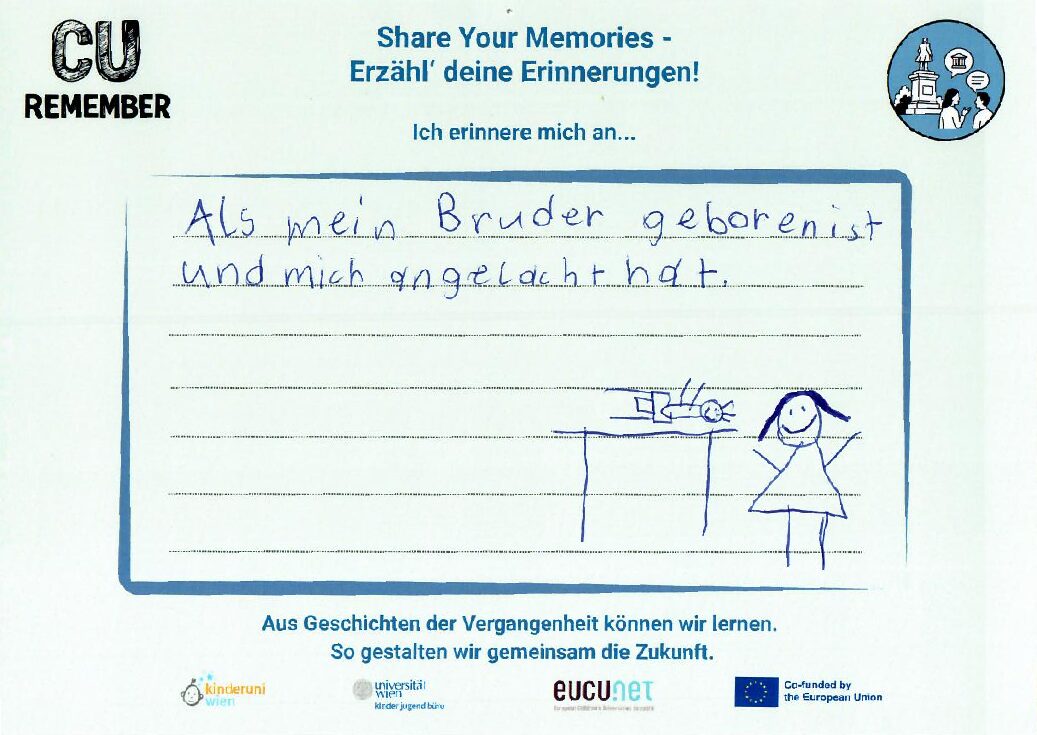
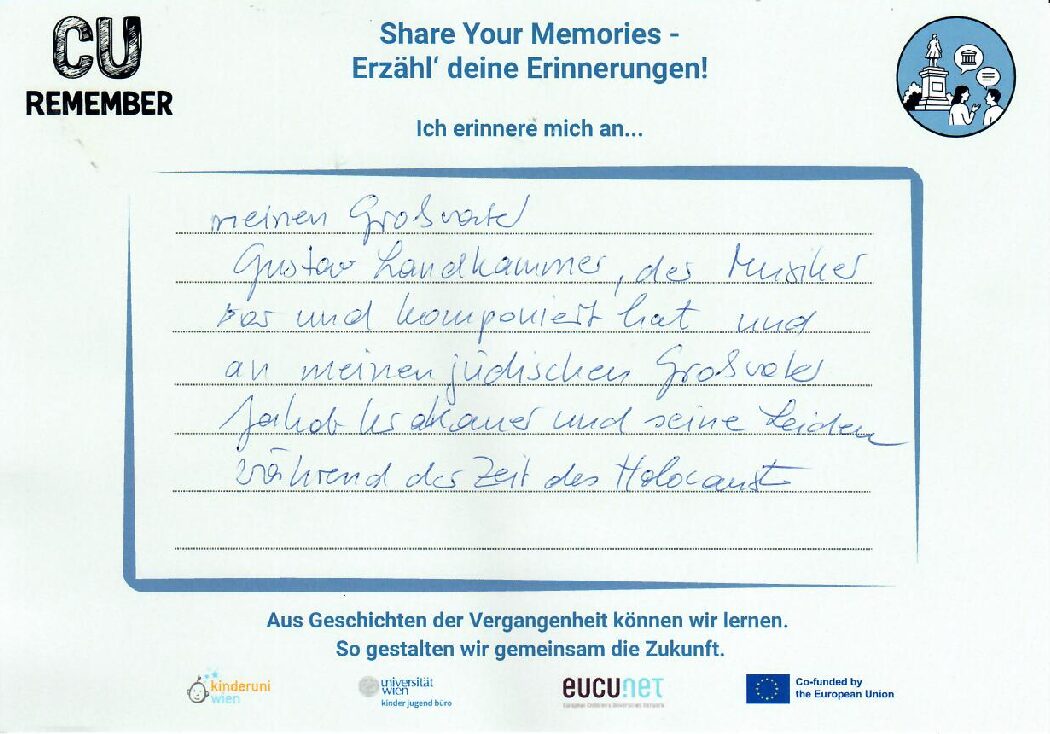
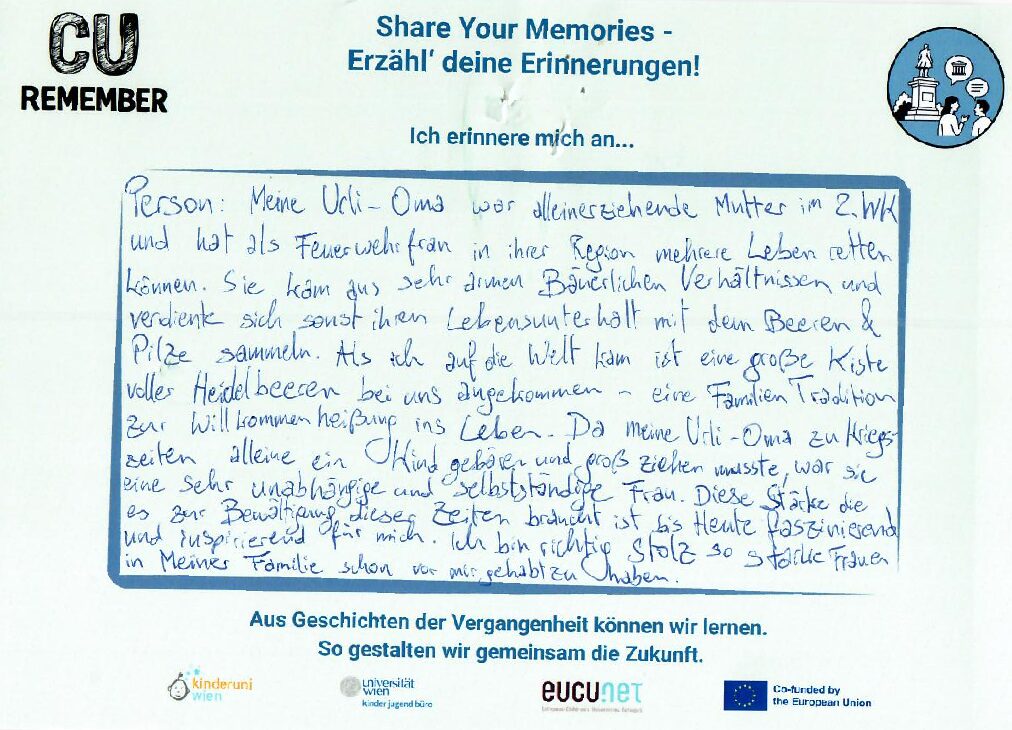
People are at the heart of many of our memories. The selected contributions range from the admiration of the Dalai Lama and the joyful memory of a brother’s birth to stories about grandparents and great-grandparents, including a great-grandmother’s experiences during the war and the strength she showed, as well as the story of a Jewish grandfather and what he endured during the Nazi period.
The contributions showed that collective memory is not a single, fixed story. It is shaped by individual experiences, family stories and shared historical moments and passed on across generations. From children’s drawings to memories of war, migration, family and everyday life, the Memory Wall brought together different perspectives and stories – creating a vivid picture of how we remember, what we remember, and what we choose to pass on.
All images by © Markus Korenjak
 |
Funded by the European Union. Views and opinions expressed are however those of the author(s) only and do not necessarily reflect those of the European Union or the European Education and Culture Executive Agency (EACEA). Neither the European Union nor EACEA can be held responsible for them. |