
by Chiara Thörmer [Vienna University Children’s Office]
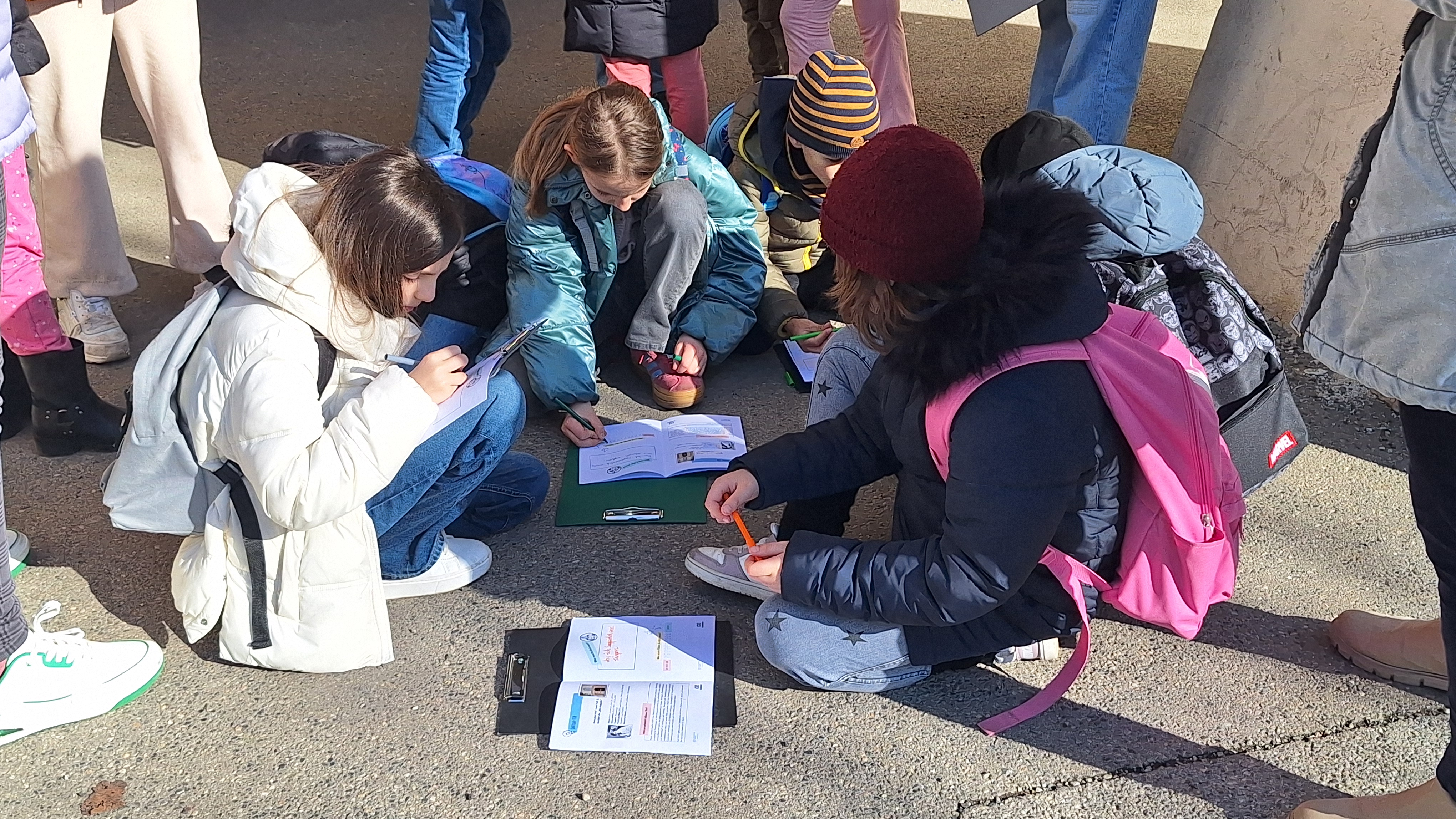
During the campus tour, primary school students follow a “Memory Trail” across the Campus of the University of Vienna. From the very beginning of the planning process, it became clear that the many impressions and pieces of information gathered along the way needed to be captured and reflected upon. This led to the idea of a Memory Journal accompanying the children throughout the tour.
The idea behind the Memory Journal
At the heart of the Memory Journal is the idea of connecting the past with the students’ own perspectives. It is designed as a flexible tool that encourages active participation and personal engagement. Through open-ended questions and small tasks, students are invited to form their own opinions and make connections to their own lives. For example, questions like “Who are the important people you remember?” or “What makes you strong?” create space for reflection and shared discussion within the group.
Each Memory Journal begins with a short introduction to the history of the campus, along with a map that outlines the route of the tour. This helps students find their way around and follow the Memory Trail as they move from one station to the next.
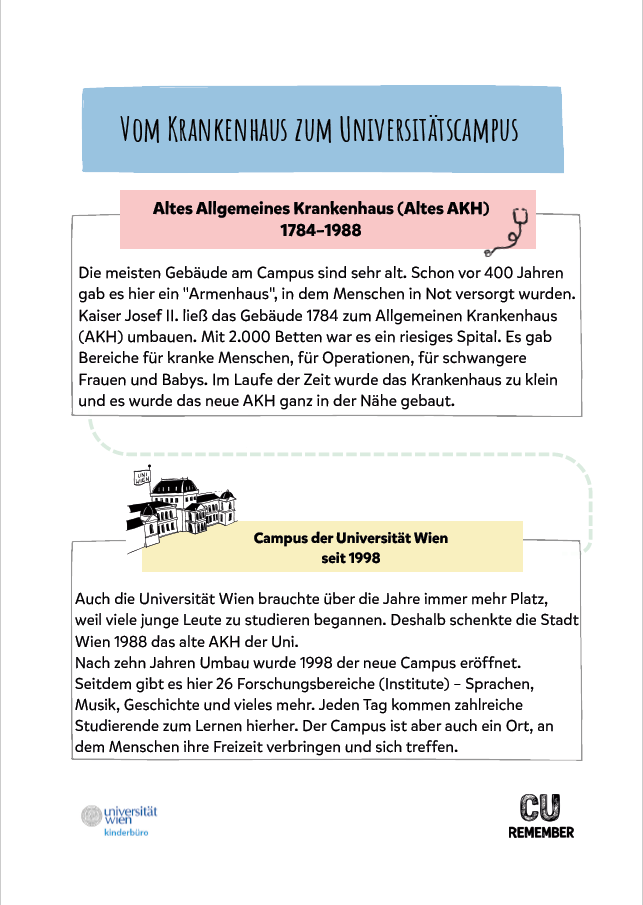
Remembrance Journal_Geschcihte Campus
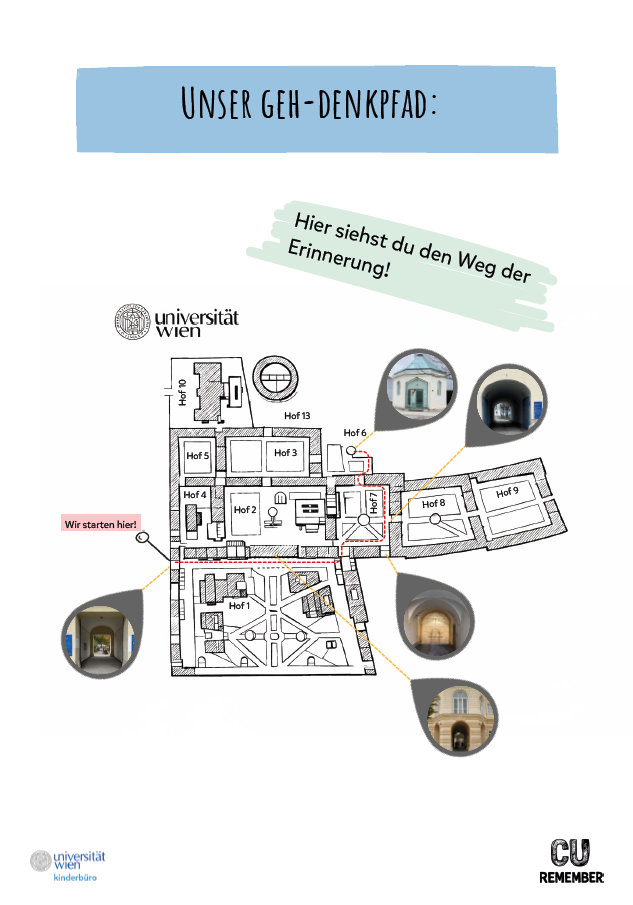
Remembrance Journal_Campus tour
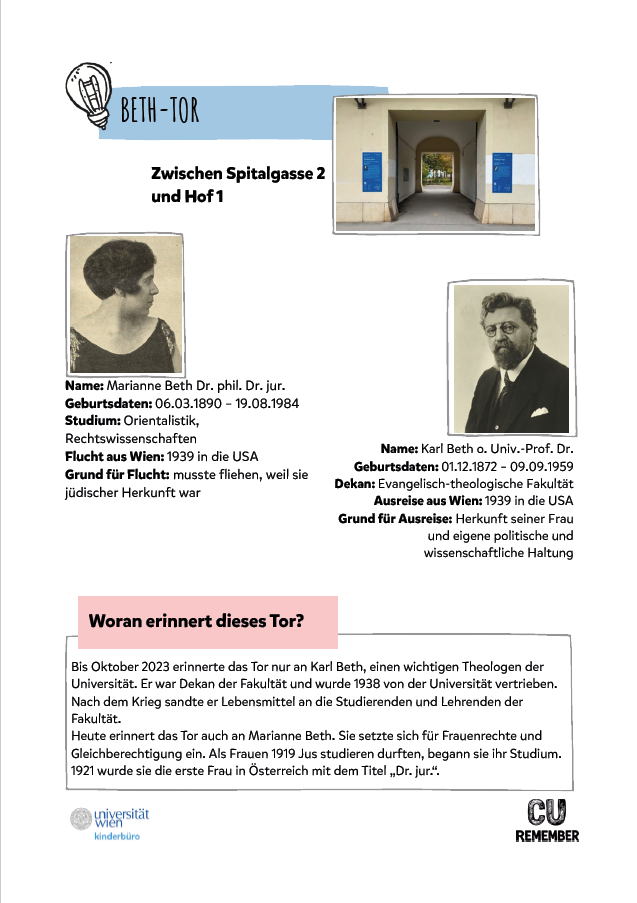
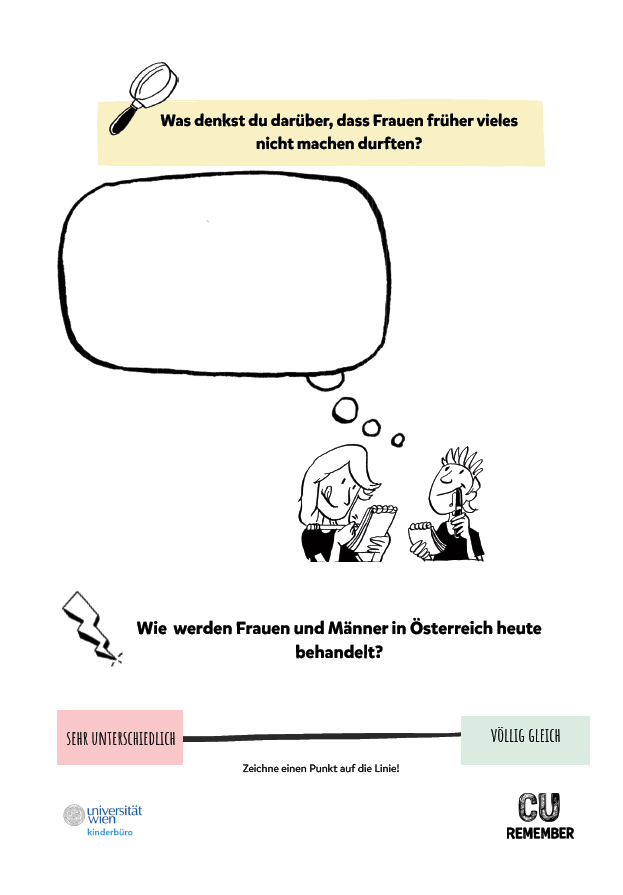
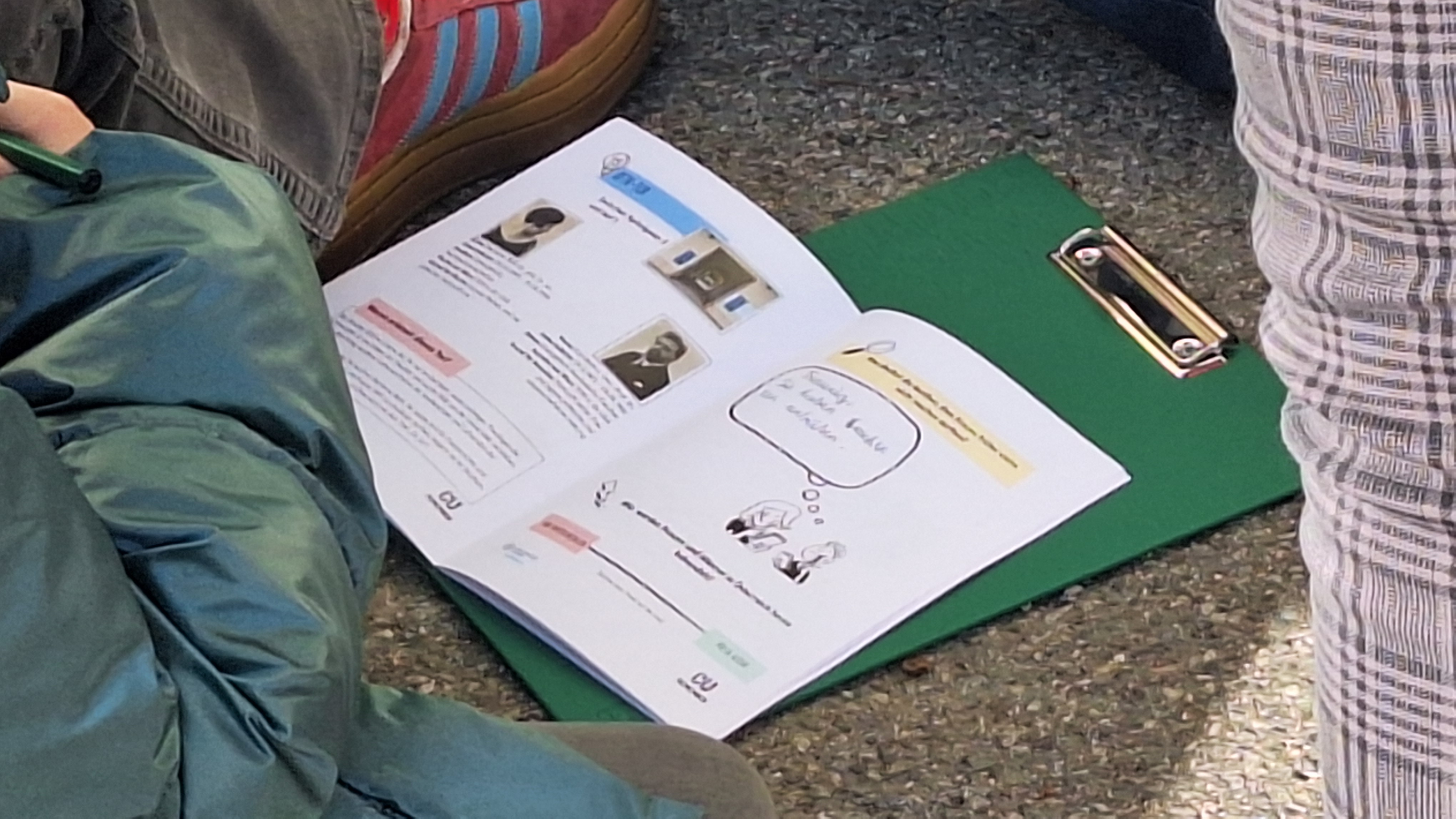
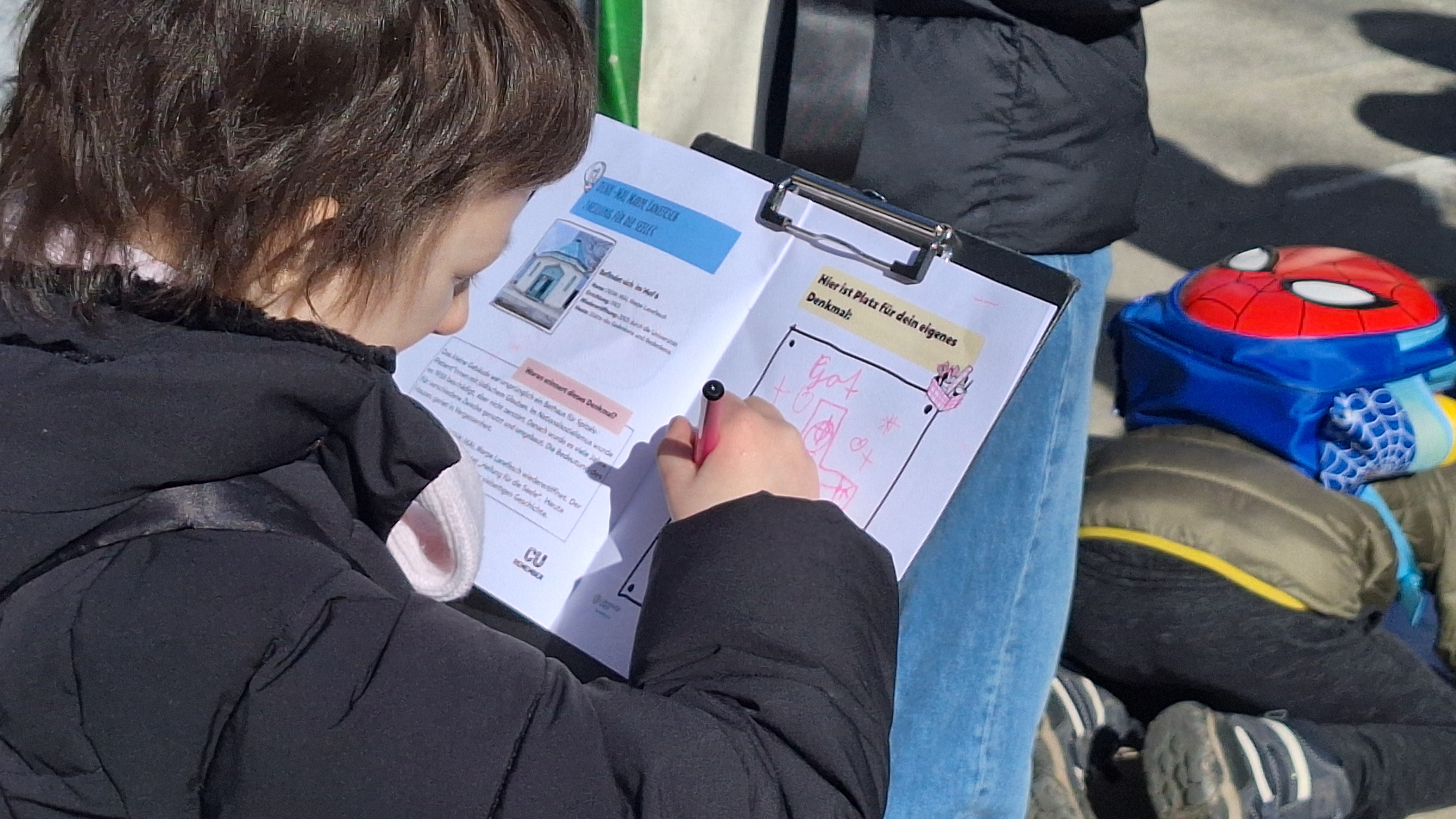
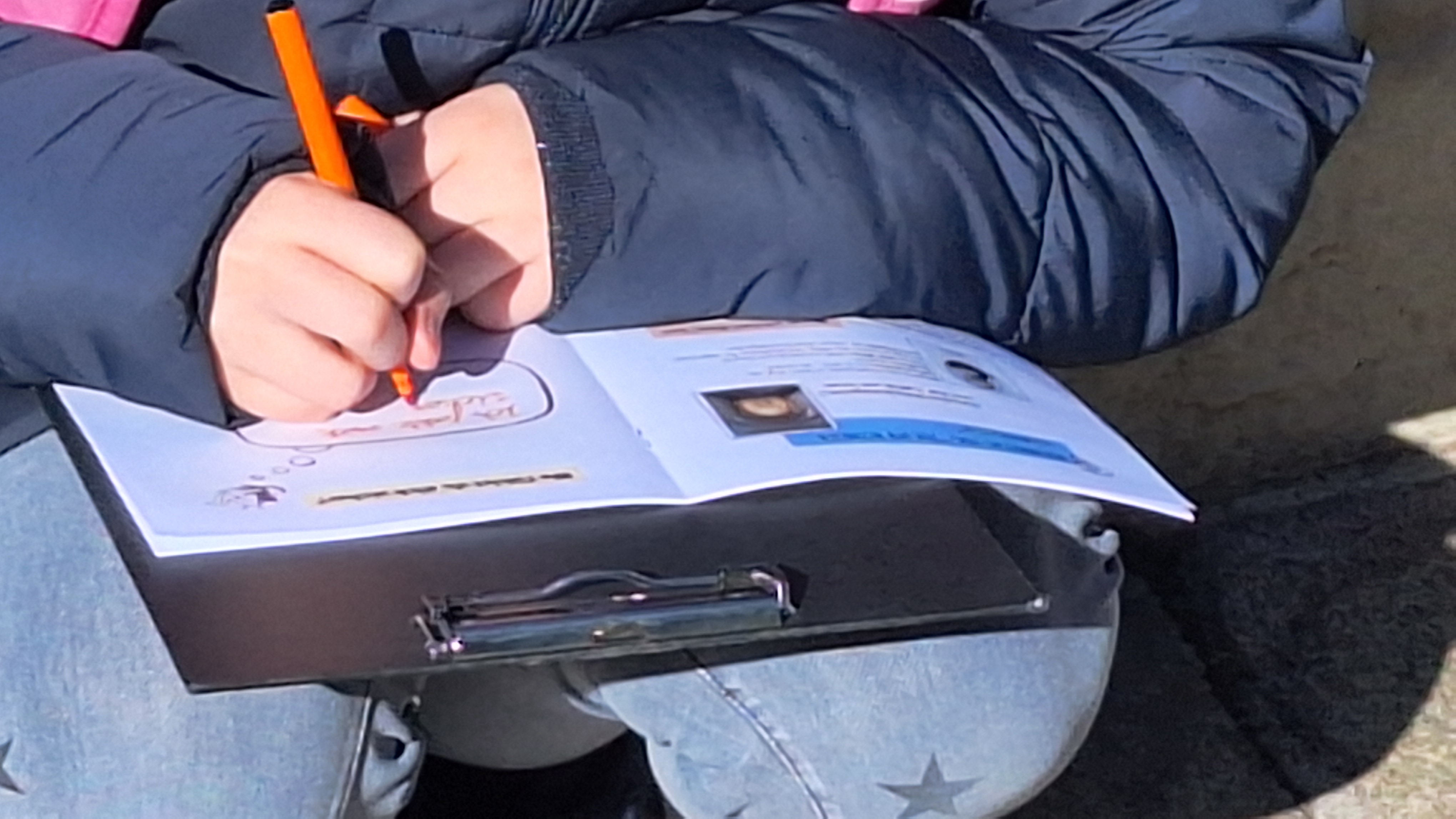
For each station, the journal includes a double-page spread: on one side, the story of a person or place is presented in an accessible, age-appropriate way. On the other side, students are invited to respond to a task or question. These activities are closely connected to the story and encourage students to express their own ideas, opinions, and impressions, whether through writing or drawing.
At the same time, the journal also points beyond the tour itself. The campus holds far more stories, monuments and historical sites than can be explored in a single tour. For this reason, the journal concludes with a map that allows students to add their own places of remembrance, encouraging them to continue exploring the campus and shaping their own understanding of memory.
The Design Process
It was particularly important to design the Memory Journal in an engaging and age-appropriate way. The culture of remembrance is often connected to complex and sensitive historical topics, which is why the language was kept simple without losing important content. At the same time, the journal was designed to feel friendly and accessible, but not overly playful.
A key focus throughout the design process was to create a balance between information and personal engagement, ensuring that students are not only introduced to historical content but are also encouraged to respond to it in their own way.
Remembrance as an Individual Experience
The Memory Journal illustrates that remembrance does not only take place through monuments, gates of memory, or historical sites, but is also shaped through personal engagement with them. As school students work through the journal, each page reflects their own thoughts, impressions and ways of understanding what they encounter along the tour. In this way, the Memory Journal becomes more than just an accompanying tool – it turns into a space where remembrance is actively formed, connecting historical places with the individual perspectives of young people.
20260225_095147
Erinnerungstagebuch Gruppe
20260225_111137
20260225_102506
All images by © Chris Gary and Thomas Troy