
by Chiara Thörmer [Vienna University Children’s Office]
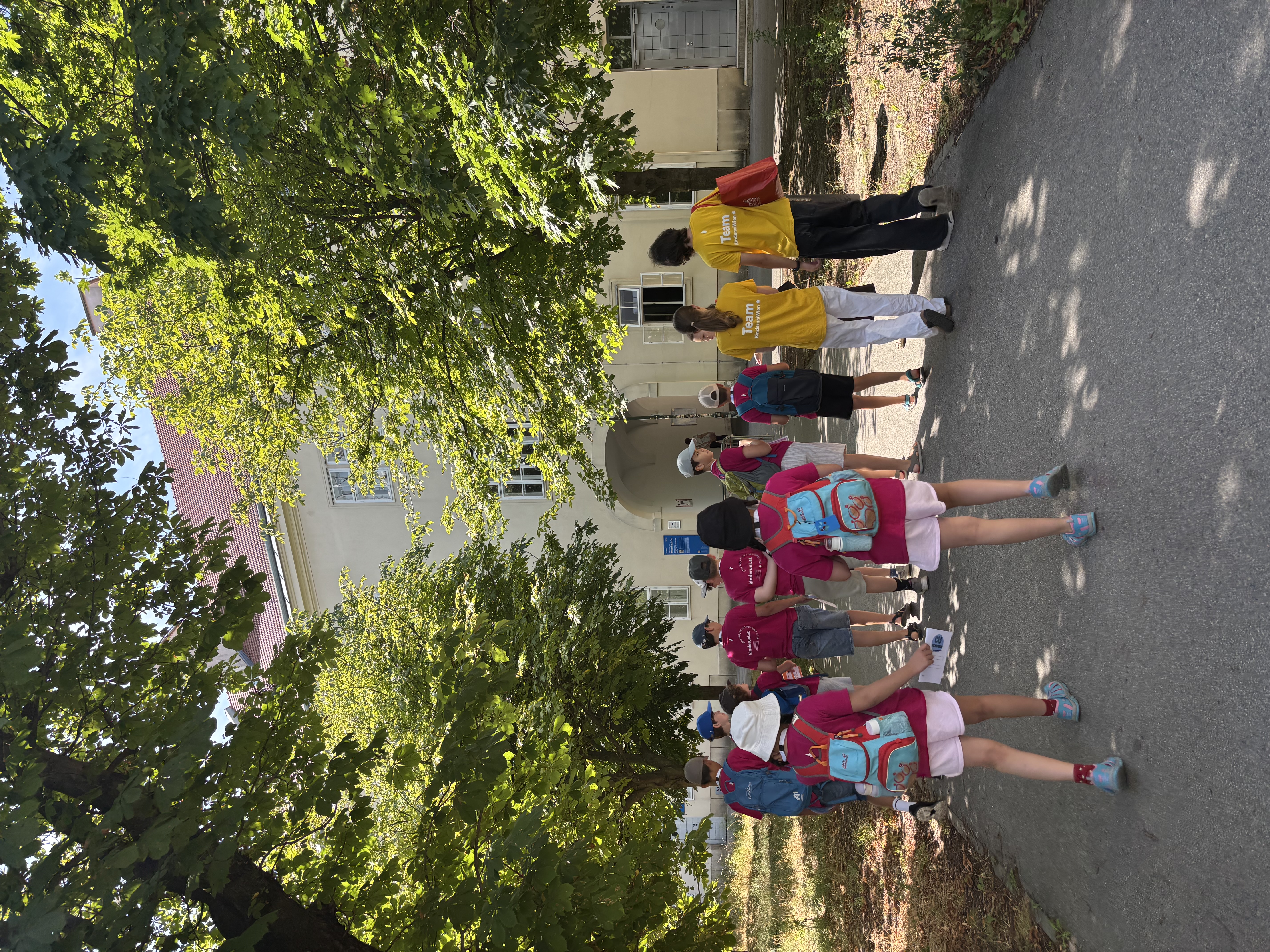
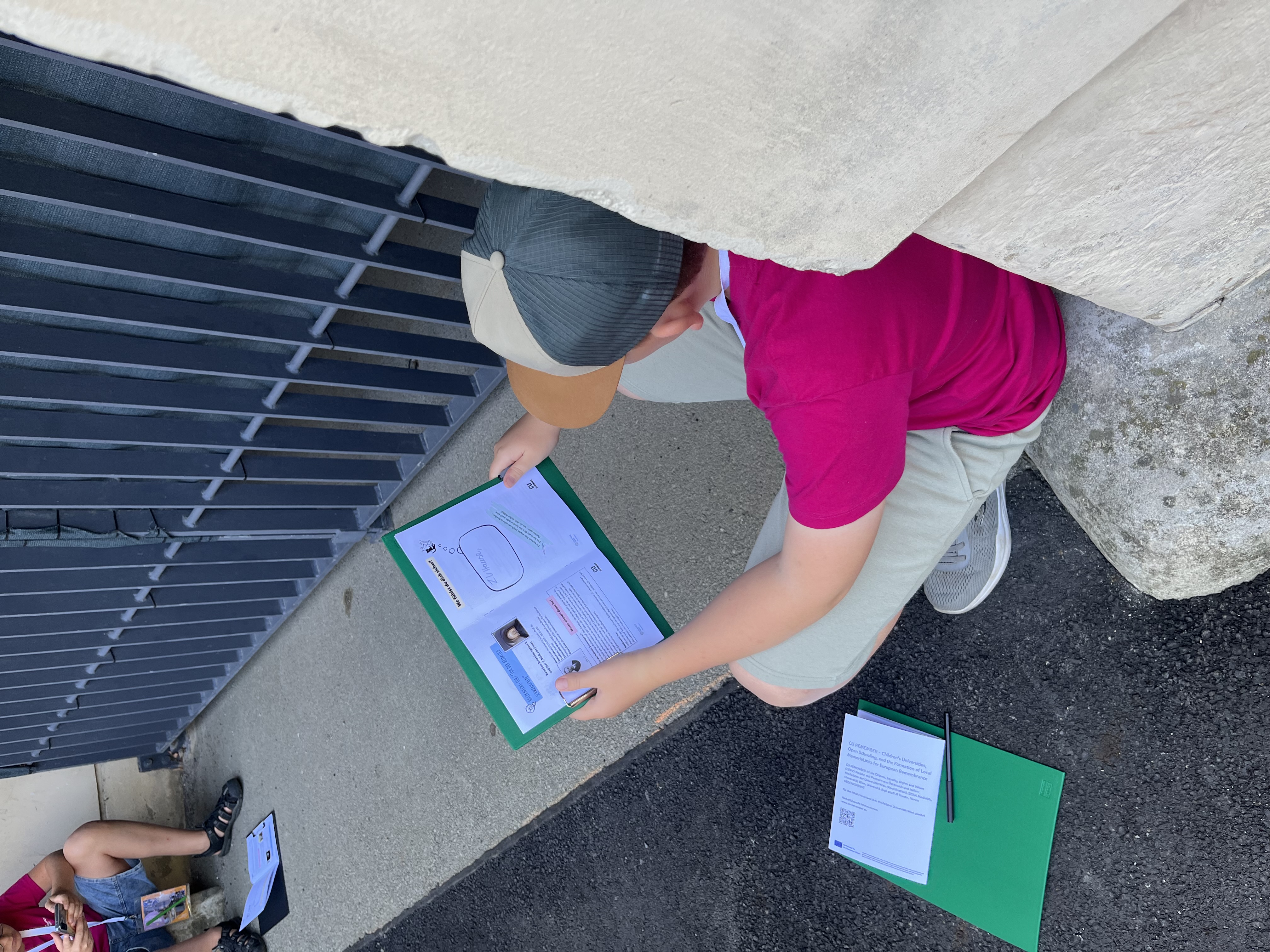
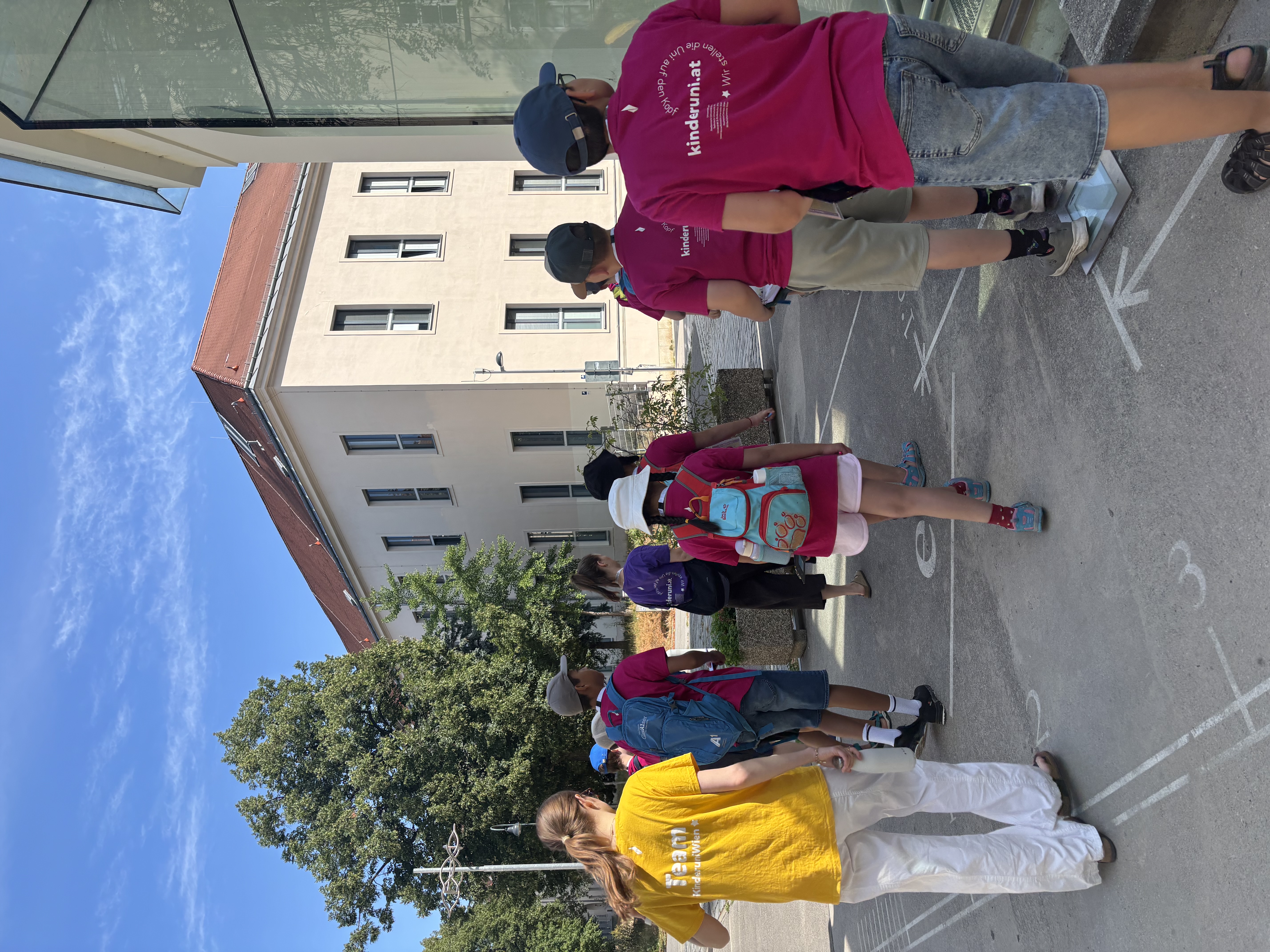
During the Children’s University, the campus remembrance tours were also offered as part of family-oriented guided tours. These tours provided valuable insights into the ways parental involvement can influence both children’s participation and the dynamics of the group, while also highlighting some of the challenges tour guides face when working with mixed-age groups:
The Impact of Adult Involvement
During the family tours, parents often asked complex and more in-depth historical questions and became actively involved in the discussions. At times, this shifted the focus of the conversation away from the main topic of the guided tour, making it more difficult for the children to follow and causing them to become less attentive. At the same time, children tended to be more reserved when their parents were present and were less likely to actively contribute to the discussion.
In contrast, the tours with school groups revealed a different dynamic: Although adults were present here as well, the teachers took on a supportive rather than an active role. During the tour, they were responsible for supervision and supported the educators with more complex tasks or terminology. At the same time, they were available as points of contact whenever needed, without playing a significant role in the interactions themselves.This allowed the focus to remain more strongly on the children and their engagement with the topic. The children were able to engage more deeply with the tour, asked more questions, and participated more actively. Their interest and curiosity were clearly evident. They also encouraged one another to ask questions and get involved. When, for example, one child raised a question or made a comment, others could build on it or were encouraged to contribute as well.
Family tours present a somewhat different situation. Because of their close and more personal relationship with their children, parents may become more directly involved in the interaction. While their questions and interests are certainly relevant to the topic, they can sometimes leave children with less space to participate.
The Role of Tour Guides in Balancing Children’s and Parents’ Needs
This raises an important question for future family tours: How can we address parents’ questions and interests without losing sight of the children? One possible approach would be to briefly explain at the beginning that the tour has been specifically designed for children and that they are at the centre of the experience. Parents’ questions could also be addressed more informally and “on the go”, allowing the focus to remain on the children. Another possibility is to
 |
Funded by the European Union. Views and opinions expressed are however those of the author(s) only and do not necessarily reflect those of the European Union or the European Education and Culture Executive Agency (EACEA). Neither the European Union nor EACEA can be held responsible for them. |