
by Tommaso Chiarandini [Teacher]
In September 2025 I had the opportunity to attend the Workshop “Photos, Films, Documentaries, and Monuments: Tools and Methodologies for teaching Memory”, organized at the University of Trieste.This workshop was centred around the relation between images and the Holocaust, and provided me not only with some new knowledge but also, most importantly, some interesting tools to use in the classroom.
In first instance, the workshop gave me and my colleagues the opportunity to keep up with new research and some of the latest trends in historiography. For a teacher time is a (very) finite resource, and this admittedly vital updating work can often be a challenge. Workshops like this are an excellent way to solve, at least in part, this issue. Secondly, I believe that working on and with images could be a key to bypass one of the biggest constraints and obstacles for a teacher in the 21st century: the apparently inescapable vanishing familiarity of our students with the written word. For most of the kids reading is hard, very hard, especially when dealing with the long and complex texts typical of history.
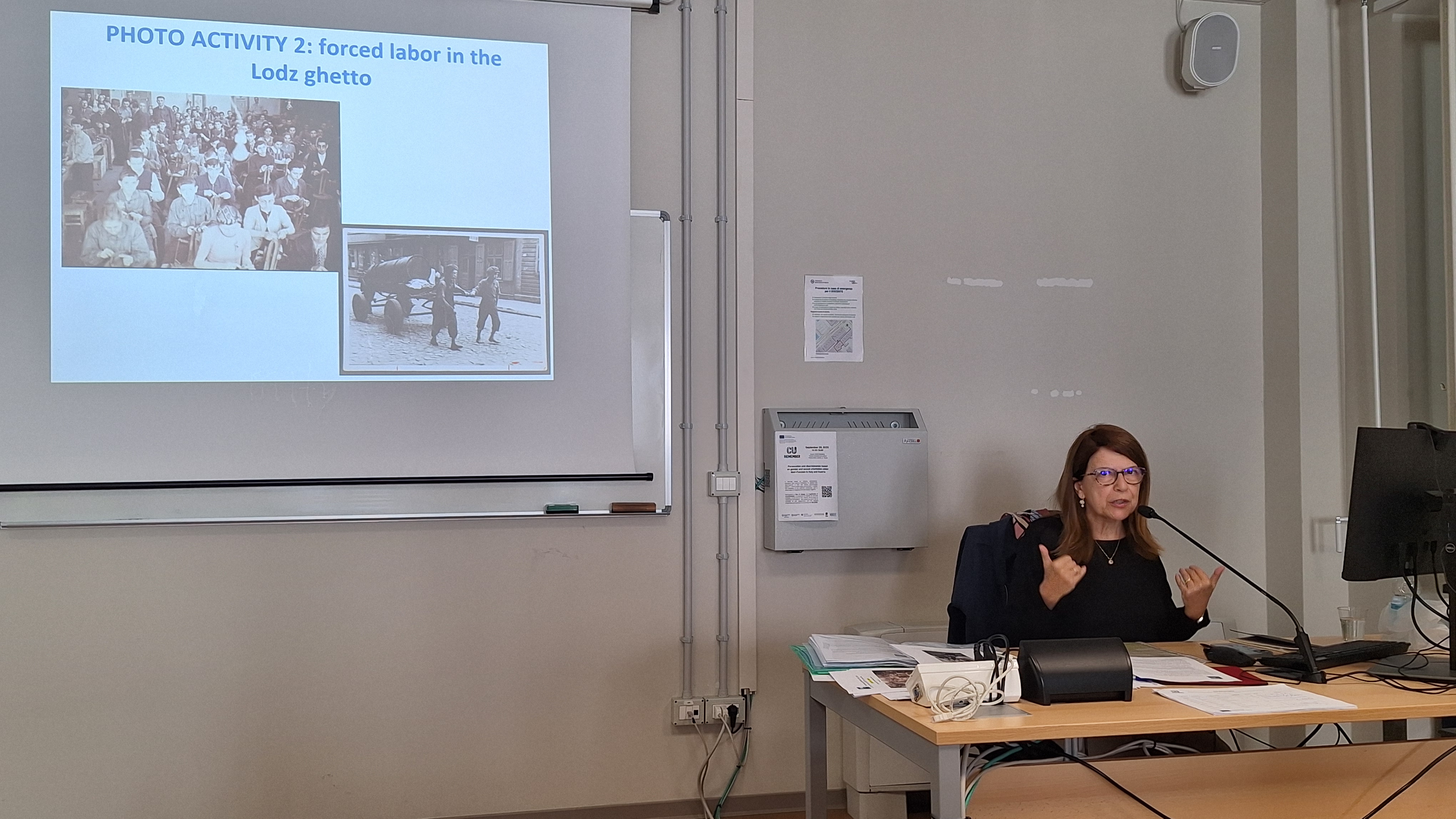
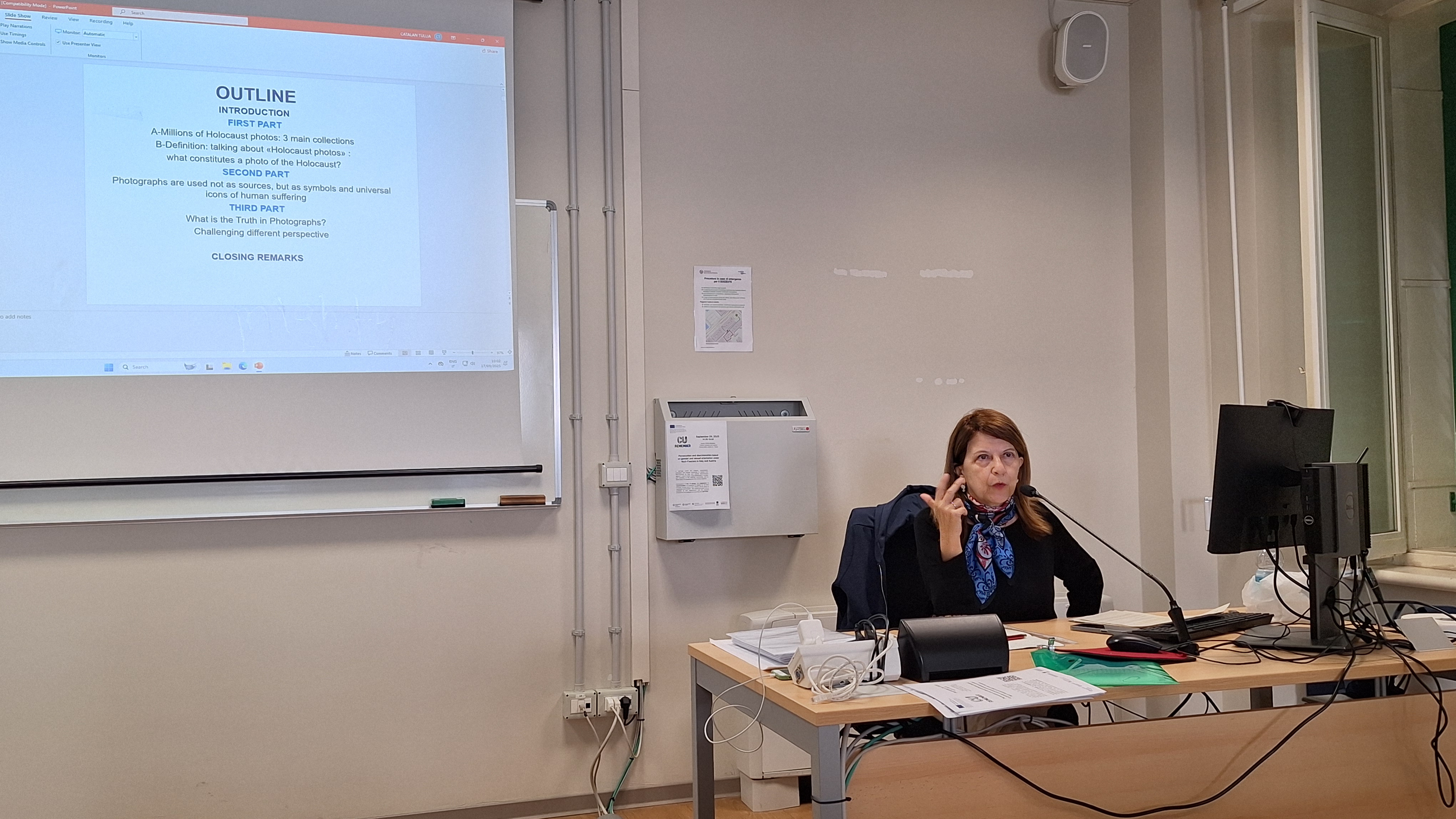
The sort of workshop approach suggested, for example, by Laura Fontana in her talk regarding the photographs from Łódź Ghetto, is in my opinion a nice way out than can be reproduced fairly easily in the classroom. Dr. Fontana used sets of images shot in this Polish ghetto, both by German authorities and Jewish inhabitants, not really to investigate events or places, but to ascertain what the photos tell us about those who took them: why, and for whom, did they take that picture? why did they keep it? what images, what messages, did they want to convey? And this is, in my opinion, the historian’s work in a nutshell.
Working on (and with) images using the methodologies shown by the various speakers is an excellent way of translating the historian’s tools for new generations. Analysing and contextualising images teaches skills that could translate to our day-to-day life, especially in a mostly visual society such as ours. After all, as humans and citizens, should we trust an influencer’s or a politician’s post, or should we exercise some source criticism?
Finally, images are powerful. They can be something that spurs curiosity and interest in at least some students. Films and photos require some active participation from those who are watching them, and if properly selected and presented they can spark discussions, open new threads, raise new questions and, in the end, encourage the students to dig deeper and work and learn on their own.
All images by © Chris Gary and Thomas Troy